
Last updated November 22, 2026
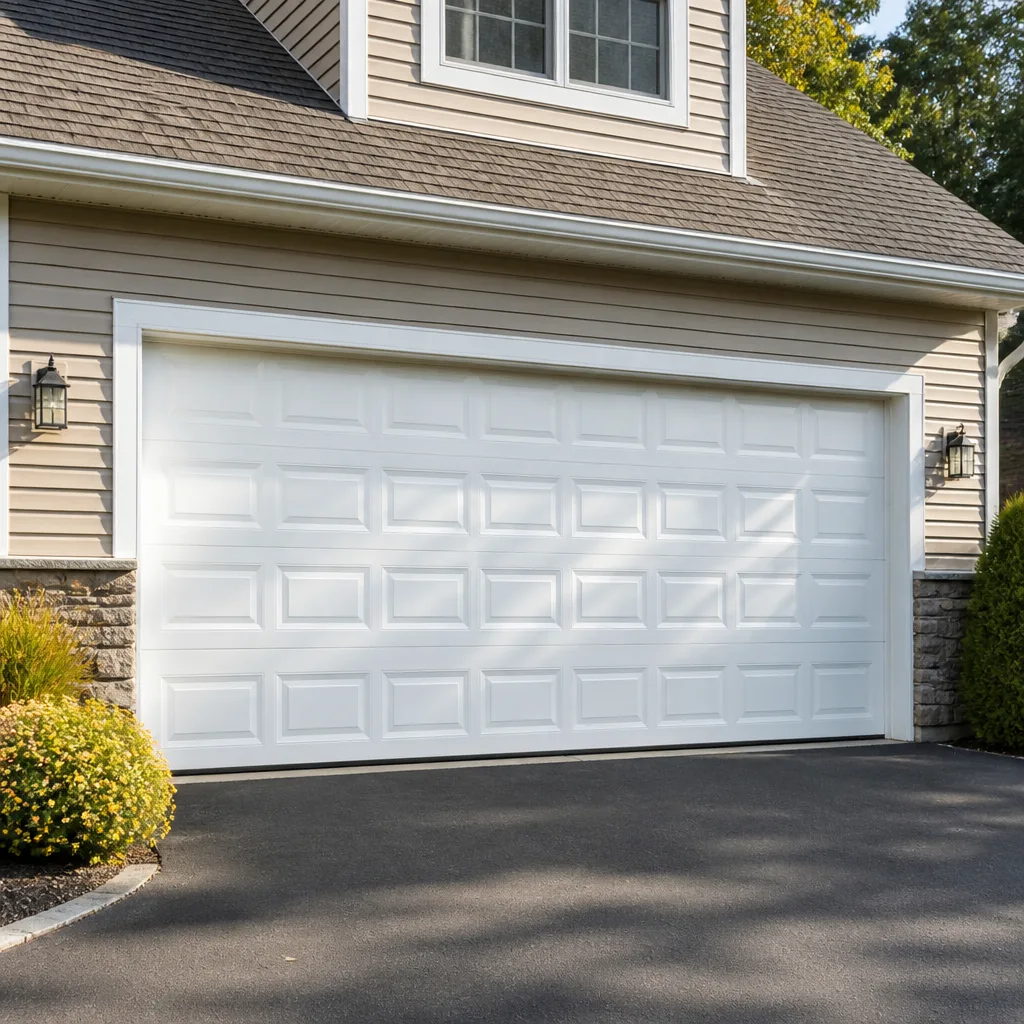 Raised-panel steel
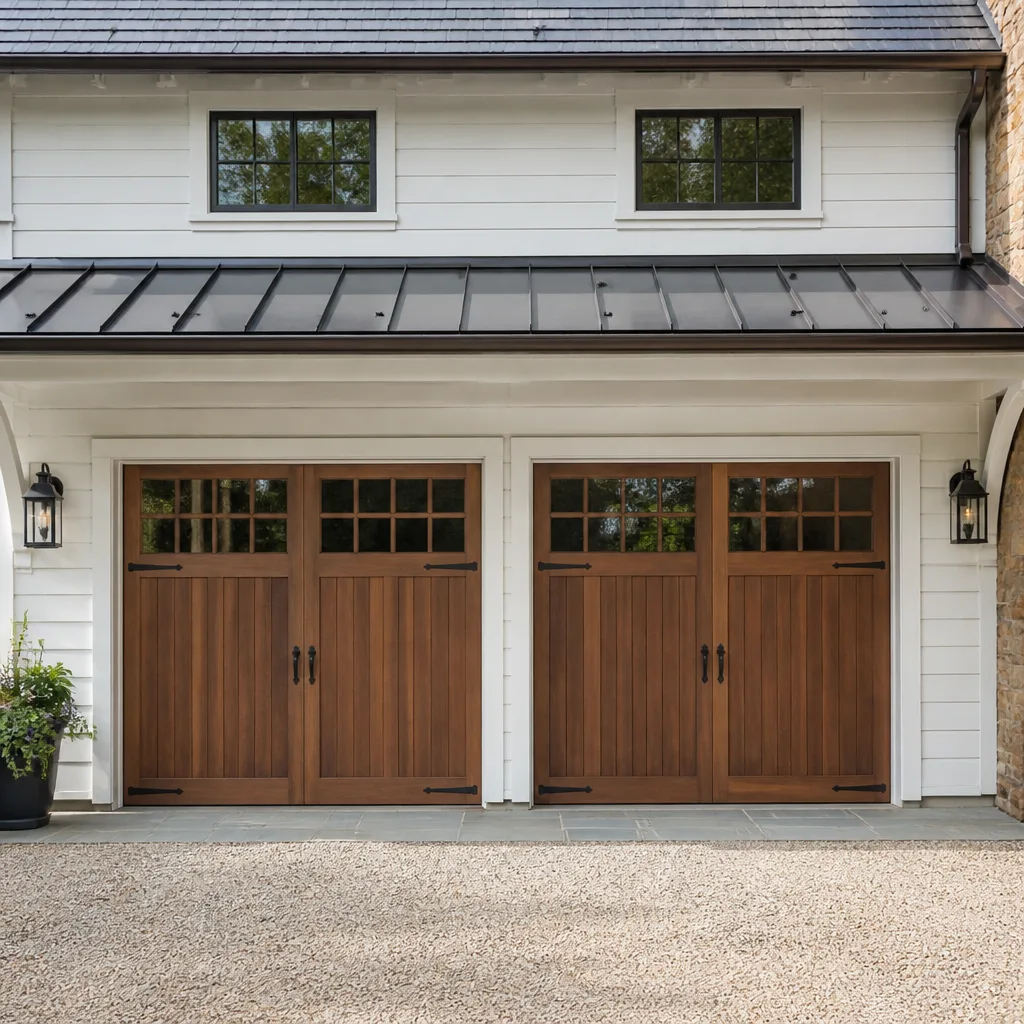 Carriage house
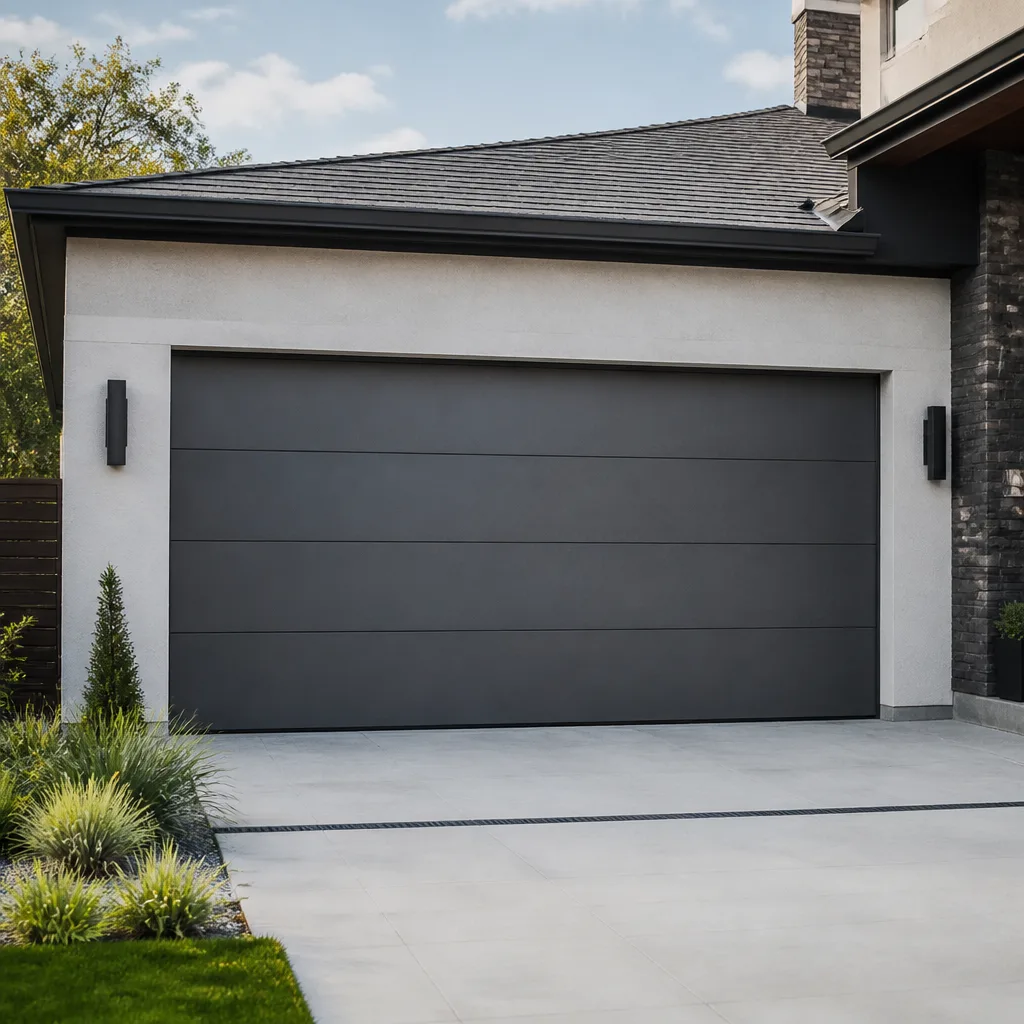 Modern flush
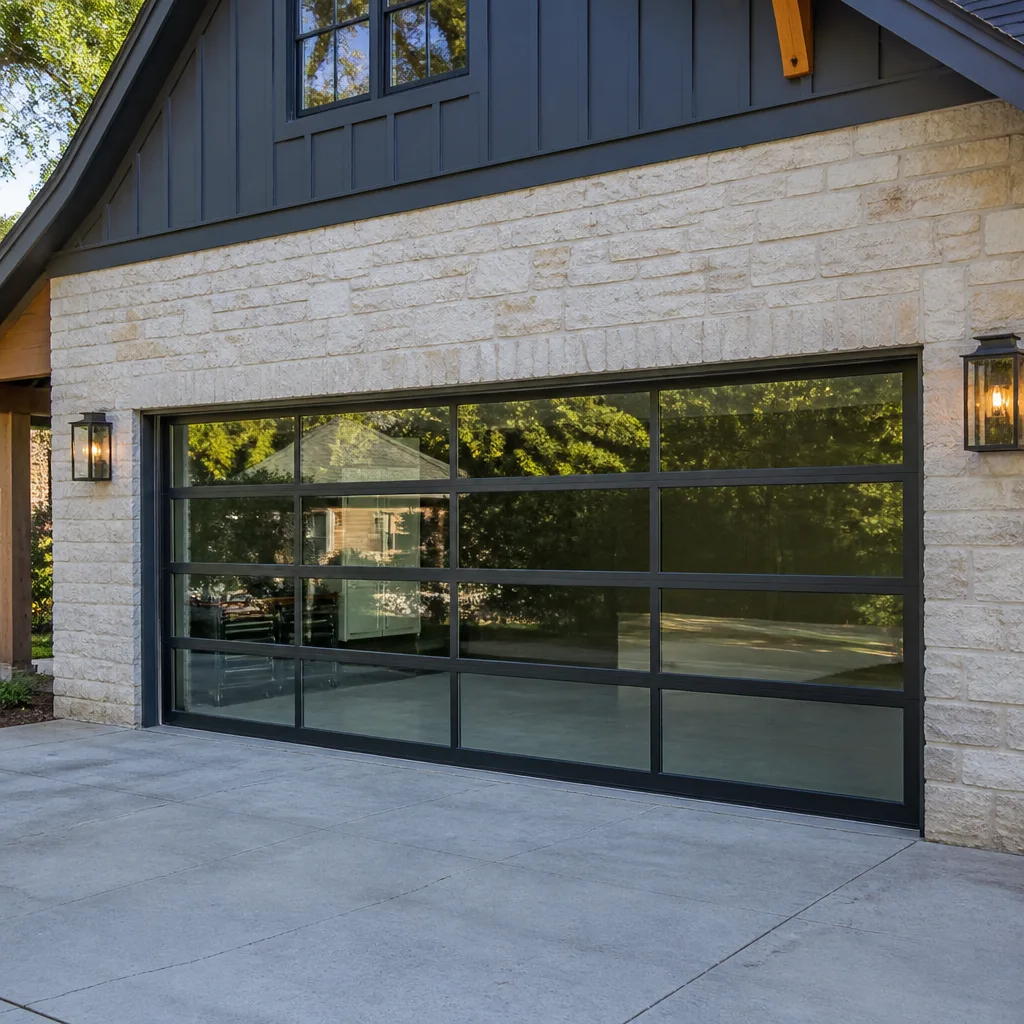 Full-view glass
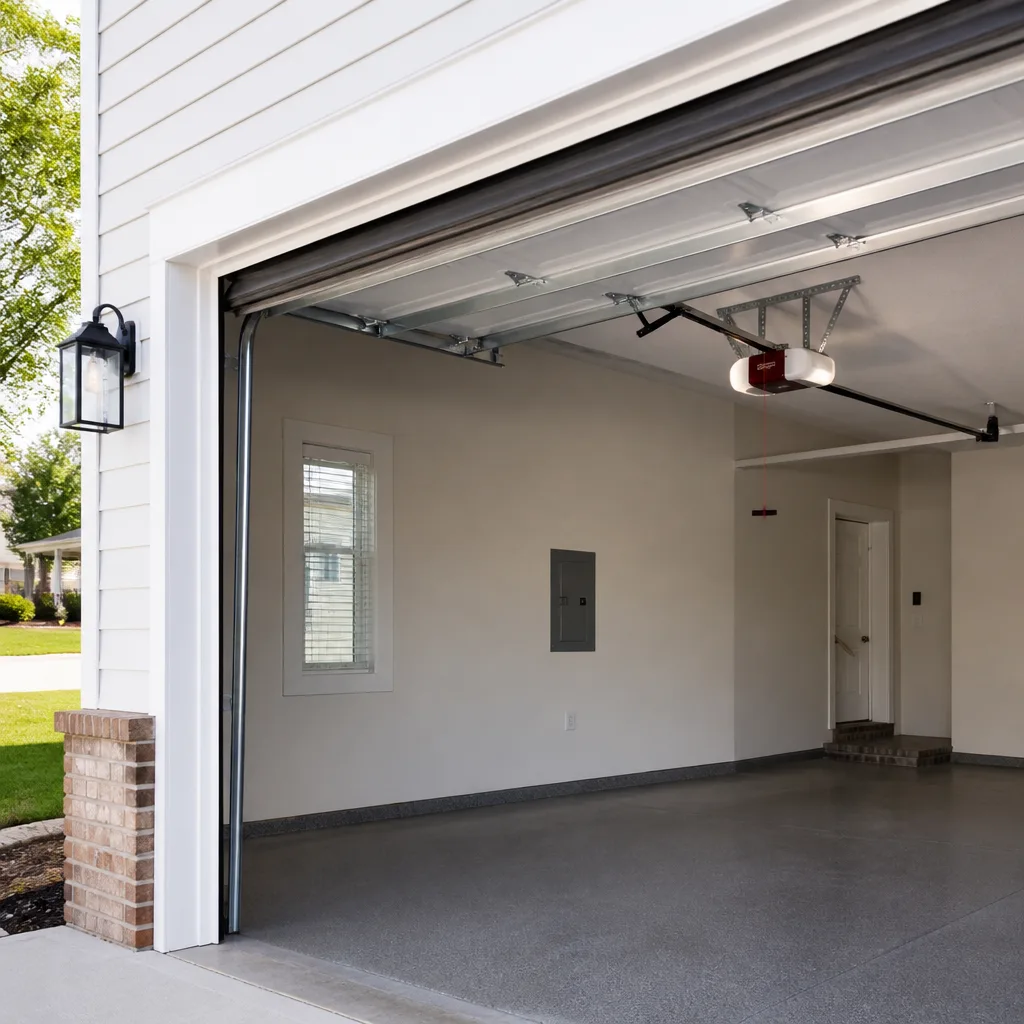 LiftMaster openers
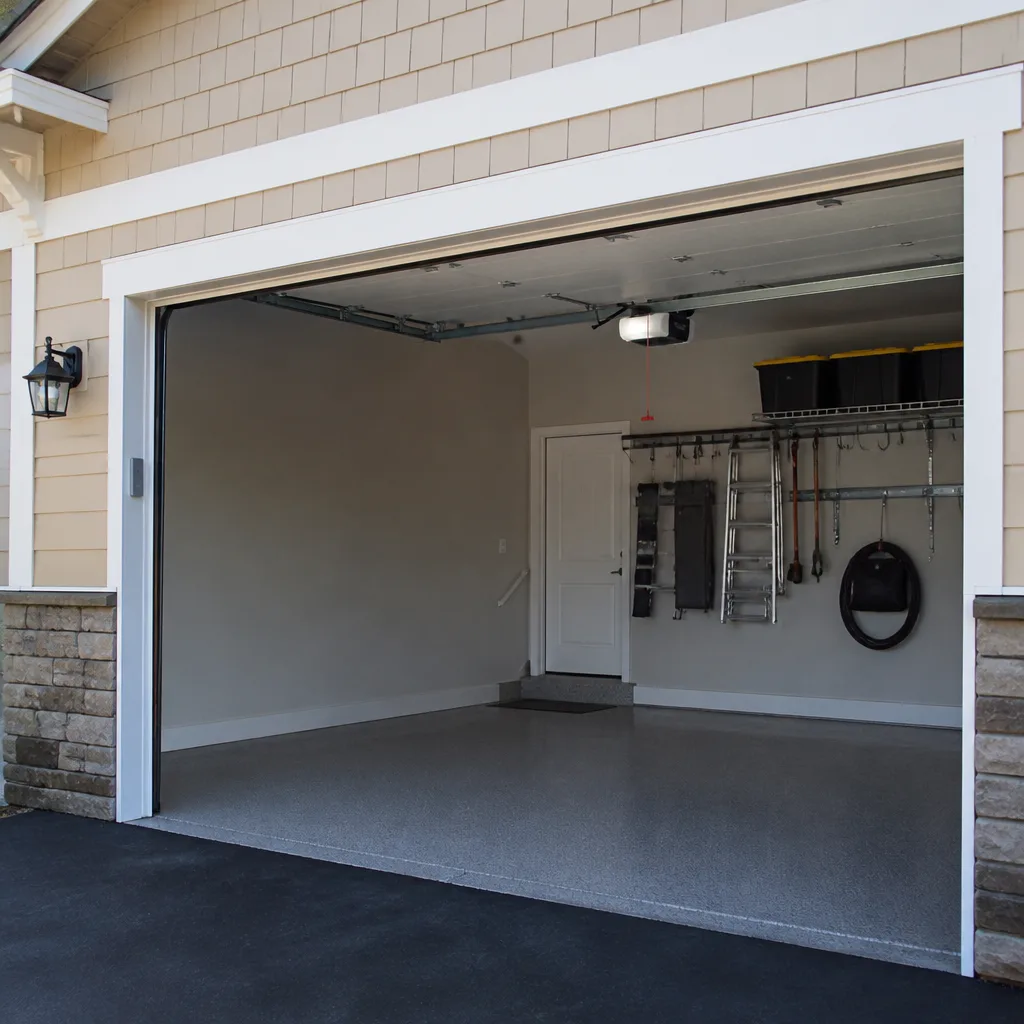 Chamberlain openers
Full 25-point door and opener safety check with every visit - springs, cables, rollers, tracks, and your LiftMaster or Chamberlain opener included
You get a price before we start. It does not change when the pro arrives.
Get your free estimateGarage Door Repair Troubleshooting in Brick Township: Common Problems and How to Fix Them
A noisy garage door and a door that won’t open at all share zero symptoms, yet homeowners routinely call for the wrong service. One is usually a lubrication or roller problem. The other is usually an opener or spring failure. Treating them the same wastes time and, worse, can lead someone to force a door that shouldn’t be forced. The diagnostic framework below sorts every garage door problem in Brick Township into five mechanical categories: opener issues, spring and cable failures, track and roller problems, panel damage, and sensor faults. Once you know which category you’re dealing with, you know whether it’s a safe five-minute check or a stop-and-call situation.
Quick Answer
Most garage door problems in Brick Township fall into one of five categories: opener faults, spring or cable failures, track and roller wear, panel damage, or safety sensor trouble. You can safely test the opener, the balance of the door, and the sensors yourself. Broken torsion springs, frayed cables, and bent tracks are stop-now problems that need a trained technician, not a homeowner with a ladder.
Styles & brands we work with
- Raised-panel steel
- Carriage house
- Modern flush
- Full-view glass
- LiftMaster openers
- Chamberlain openers
Table of Contents
- The Five Mechanical Categories of Garage Door Failure
- Opener Problems: When the Motor Is the Issue
- Spring and Cable Failures: The Jobs You Should Never DIY
- Track and Roller Problems: The Noise and Binding Category
- Panel Damage and Sensor Faults: The Two Most Misdiagnosed Issues
- Why Your Door Stops Mid-Travel (Four Different Causes)
- The Tests You Can Safely Run Yourself
- What Makes Brick Township Garage Doors Wear Differently
The Five Mechanical Categories of Garage Door Failure
Every garage door system, whether it’s a Clopay steel door with a LiftMaster opener or a Wayne Dalton door with a Genie unit, breaks down along the same mechanical lines. Sorting your symptom into one of these five categories is the single most useful step you can take before picking up a phone or a wrench.
- Opener faults. The motor runs but the door doesn’t move, the door reverses immediately, or the wall button does nothing. The door itself may be perfectly fine.
- Spring and cable failures. The door is suddenly very heavy, a loud bang came from above the door, or the door slams down hard. This is the dangerous category.
- Track and roller problems. Grinding, squealing, a door that shudders sideways, or rollers that have jumped the track.
- Panel damage. Dents, cracks, or a bottom section that has buckled from impact.
- Sensor faults. The door starts down and comes right back up, or won’t close at all with the remotes.
This is where most troubleshooting goes wrong. A door that reverses on the way down gets blamed on the opener, when the actual cause is often a misaligned sensor or a binding track. A door that feels heavy gets blamed on the opener motor, when the spring has actually lost tension. Identifying the category first eliminates that guesswork. Our technicians have up to 8 years of experience across LiftMaster, Chamberlain, Genie, Clopay, Amarr, Wayne Dalton, Craftsman, and Raynor systems, and the diagnosis starts the same way every time: which category does this symptom belong to?
Opener Problems: When the Motor Is the Issue
If your opener motor runs but the door doesn’t move, or the door reverses the moment it touches the floor, you’re in the opener category. The good news is this is often the cheapest fix on the list, and sometimes the simplest. Common opener symptoms include:
- Motor hums, door doesn’t move. Usually a stripped gear, a broken drive belt or chain, or a disconnected carriage. Common on older Craftsman and Genie units.
- Door reverses immediately after starting down. Sensor or force-setting issue nine times out of ten. Check the sensors first before calling.
- Remote works intermittently. Dead battery, worn remote, or a logic board issue. Try a fresh battery and a second remote before assuming the board.
- Wall button works, remotes don’t. That points to the remote or the receiver, not the opener itself.
- Nothing works. Check the breaker, the wall outlet, and the lock-out switch on the wall control.
One thing worth knowing: the same symptom can have different causes depending on brand. A LiftMaster that reverses at the floor is usually a sensor alignment issue. A Chamberlain with a similar symptom is often a travel-limit setting that has drifted. That’s why working on the brand you already own matters more than swapping in a new opener. If the motor is genuinely failing, a proper garage door opener repair can often replace the failed component rather than the whole unit.
Spring and Cable Failures: The Jobs You Should Never DIY
A torsion spring under tension stores enough force to cause serious injury. Cables carry that same load. If you suspect a spring or cable problem, stop and call a trained technician. This is not a category where homeowner troubleshooting is appropriate beyond a visual look from the floor.
Here’s how to recognize a spring or cable failure from a safe distance:
- A loud bang from above the door. That’s the sound of a torsion spring breaking. The door will suddenly feel extremely heavy.
- The door is too heavy to lift by hand. With the opener disconnected, a balanced door lifts with modest effort. If it feels like dead weight, the spring has failed.
- A visible gap in the spring coil. Look up at the torsion spring above the door. A clean break shows as a gap in the winding.
- Frayed or snapped cables. Cables run along the sides of the door. Any fraying, kinking, or slack is a stop-now problem.
- The door hangs crooked. One side dropping lower than the other often means a snapped cable on that side.
We treat spring repair as its own dedicated service because it’s the most mechanically demanding job in the trade. Most general handymen won’t touch it. A proper garage door spring repair involves matching the correct wire gauge and cycle rating to your door’s weight, not just swapping in whatever spring fits. Springs are the most dangerous part of your garage door, and we treat them that way. If you’re seeing any of the symptoms above, call (877) 792-6059. We answer 24/7. Fast dispatch from 7am to 7pm, Sunday through Friday.
Track and Roller Problems: The Noise and Binding Category
Grinding, squealing, and a door that shudders on its way up or down almost always fall into the track and roller category. This is the safest category for homeowner inspection, because you’re looking at parts that aren’t under spring tension. You can check these things on your own:
- Look at the rollers. Steel rollers wear flat spots. Nylon rollers crack. Any roller that looks worn, cracked, or doesn’t roll smoothly needs replacement.
- Check the vertical tracks with a level. Both side tracks should be plumb. A track that has shifted out of alignment will bind the rollers.
- Look for a bent track. A visible kink or bend in the track is a stop-and-call item, not a homeowner fix.
- Listen for the source. Squealing usually comes from dry rollers or hinges. Grinding often comes from a roller that has jumped the track.
- Check the hinges. Loose or worn hinges let the door sag and drag.
A door that shudders as it moves is telling you the tracks and rollers are fighting each other. Left alone, that binding puts extra load on the opener and eventually on the springs. Lubricating rollers and hinges is a reasonable maintenance task. Replacing rollers and realigning tracks is a job for a technician who can also check that the door is balanced afterward. When the door noise is accompanied by any hesitation or reversing, a garage door repair that addresses tracks, rollers, and balance together is the better call than piecemeal fixes.
Panel Damage and Sensor Faults: The Two Most Misdiagnosed Issues
Panel damage and sensor faults get blamed for a lot of problems they didn’t cause. Panel damage is usually obvious: a dented section, a cracked panel, a bottom section that buckled when something hit it. The question is whether the panel damage is cosmetic or structural.
- Cosmetic panel damage. A dent or scratch that doesn’t affect the door’s operation or the panel’s integrity. This can wait.
- Structural panel damage. A cracked panel, a buckled bottom section, or a panel that has pulled away from the stiles. This weakens the door and needs attention before the opener or springs take the strain.
Sensor faults are the other commonly misdiagnosed category. The two photoelectric sensors at the bottom of the tracks are there to reverse the door if something blocks the beam. When they’re dirty, misaligned, or the wiring is loose, the door won’t close, or it reverses immediately. A few things to check:
- The small LED lights on each sensor should be lit. A dark LED on either sensor points to a wiring issue or a dead sensor.
- Wipe both lenses with a soft cloth. Dust and spider webs cause more sensor faults than anything else.
- Check that the sensors point at each other. A bumped sensor is a common cause of a door that suddenly won’t close.
- Check for anything in the path of the beam: a stored item, a bicycle, a bag of mulch.
If the sensors are clean, aligned, and lit but the door still won’t close, the problem is elsewhere. That’s a case where a technician can trace the wiring and check the opener’s logic board.
Why Your Door Stops Mid-Travel (Four Different Causes)
A door that stops partway up or partway down is the single symptom that sends homeowners to the wrong service most often. The same behavior has four different root causes, and each one points to a different fix.
- Binding track or worn rollers. If the door stops at roughly the same spot every time and you can hear it straining, the track is binding. This is a track and roller issue, not an opener issue.
- Force limit set too low. Modern openers have a force adjustment. Set too low, the opener thinks the door is obstructed and reverses. Set too high, the opener strains against a real obstruction. Getting this right is a technician adjustment.
- Failed spring tension. If the door stops on the way up and feels heavy when you try to lift it by hand, the spring is losing tension.
- Sensor interruption. If the door goes up fine but reverses partway down, that’s almost always a sensor issue, not a force issue.
Here’s the diagnostic shortcut. If the door stops at the same point going up and feels heavy, think spring or track. If it goes up fine and reverses on the way down, think sensor. If it stops at random points, think force adjustment or opener logic. Getting the category right the first time is what eliminates the wasted call. In our experience, roughly half the “my opener is broken” calls turn out to be a track, roller, or sensor issue that the opener was simply reporting.
The Tests You Can Safely Run Yourself
Some garage door troubleshooting is safe for a homeowner. Some absolutely isn’t. The difference comes down to whether the part you’re testing is under spring tension. These are the checks you can run without endangering yourself.
Safe homeowner checks
- The manual disconnect test. Pull the red release handle to disconnect the door from the opener. If the door is easy to lift by hand, the springs are fine and the issue is with the opener. If it’s very heavy, the springs are suspect and you should stop here.
- The balance test. With the door disconnected, lift it halfway and let go. A balanced door stays put. A door that drops on its own has spring or cable issues.
- The sensor light test. Confirm both sensor LEDs are lit with the door open. If one is dark, check the wiring and alignment.
- The remote battery swap. A fresh battery rules out one variable quickly.
- The wall outlet check. Confirm the opener is actually receiving power.
Checks that require a professional
- Adjusting spring tension. Even with the door down, the springs are under load. Never attempt this.
- Replacing cables. Cables are under spring tension and can cause serious injury if handled incorrectly.
- Straightening a bent track. A track forced back into place can jump a roller and drop the door.
- Force adjustment on the opener. Getting this wrong creates a safety hazard and can damage the opener.
The force adjustment is worth a note. Yes, you can often find a dial or a screw on the opener, and yes, turning it will change how the door behaves. What it won’t do is fix the underlying problem. If the force is set too high to get past a binding track, the door is now closing with enough force to damage whatever is in its path. That’s why we treat force adjustment as a technician task, not a homeowner dial to twist until the door moves.
What Makes Brick Township Garage Doors Wear Differently
Brick Township sits close enough to the Jersey Shore that the air carries more moisture and salt than inland New Jersey. That matters for garage door hardware. Hinges, rollers, track fasteners, and cables all wear faster here than they do twenty miles inland. The difference shows up in two ways.
First, corrosion on hinges and track hardware shows up earlier. Rollers that would last years inland often need replacement sooner in Brick Township because the bearing surfaces corrode and stop rolling smoothly. Second, cables and springs fail a bit sooner because moisture finds its way into the cable strands and the spring coils. Homeowners in neighborhoods like Herbertsville, Laurelton, and Breton Woods tend to see hardware wear before their inland counterparts in towns like Jackson or Lakewood.
The practical response is straightforward. Lubricate hinges, rollers, and the torsion spring once or twice a year with a proper garage door lubricant, not WD-40. Check the sensors monthly. Have a technician look at cables, springs, and rollers whenever the door starts to sound different or move less smoothly. That simple routine extends the life of the hardware and catches problems while they’re still cheap to fix.
Brick Township’s housing stock also plays a role. Many homes here have single or double-bay attached garages with wood-frame doors or older steel doors paired with original openers. When a Wayne Dalton or Raynor door from that era starts acting up, the problem is usually a combination of worn rollers and a tired opener motor rather than any one failure. Diagnosing the whole system at once saves the homeowner from three separate service calls over the same door.
Common Mistakes to Avoid
- Forcing a door that won’t move. If the door is stuck and you can hear the opener straining, stop. Forcing it strips the opener gear and can damage the door panels. The opener is telling you something is wrong; listen to it.
- Adjusting spring tension yourself. Torsion springs are under extreme load. Adjusting them without the right tools and training causes serious injury every year. This is the single most important rule on this page.
- Using WD-40 as a door lubricant. It’s a solvent, not a lubricant, and it dries out rollers and hinges over time. Use a proper garage door lubricant on the hinges, rollers, and spring.
- Blaming the opener for a track problem. A binding track makes the opener work harder and eventually fail. Replacing the opener without fixing the track just delays the next failure.
- Ignoring a sensor fault because “the door still works.” A door that reverses at the floor is a safety feature doing its job. A sensor that’s been defeated is a hazard, especially with kids or pets in the garage.
- Skipping the balance test after any repair. Even a simple roller swap can throw the door out of balance. Test it with the opener disconnected before you reconnect.
- Assuming Brick Township’s salt air is “normal wear.” It does accelerate hardware wear, but that’s a reason to check more often, not a reason to accept a grinding door as just how it is.
See the difference
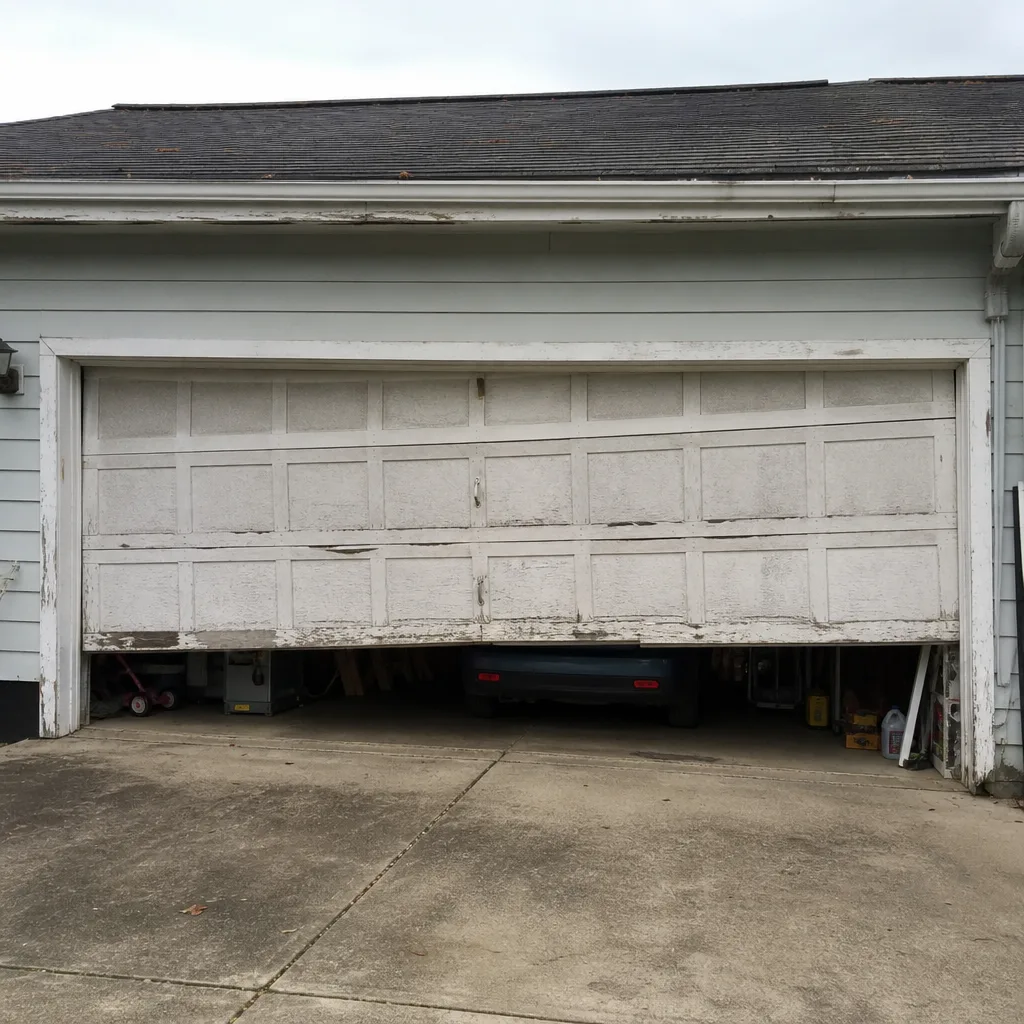 Before
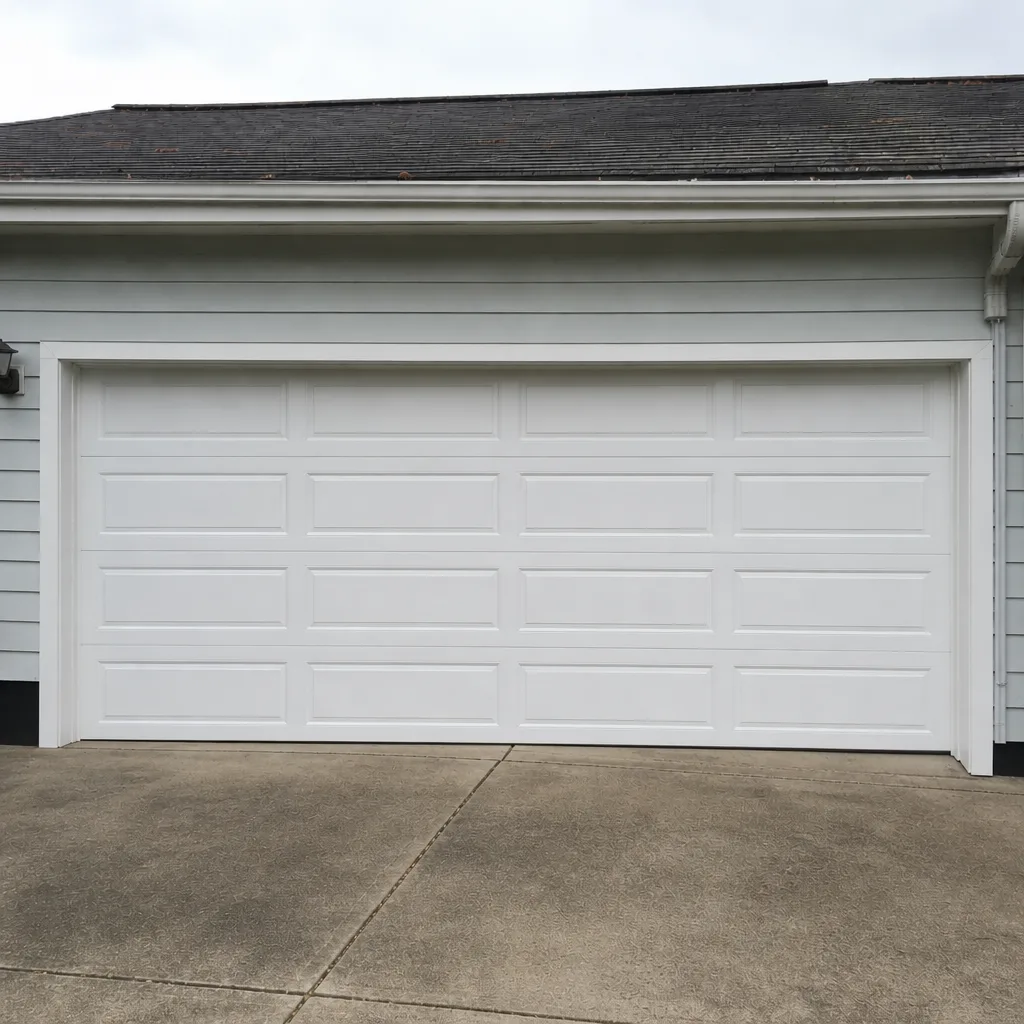 After
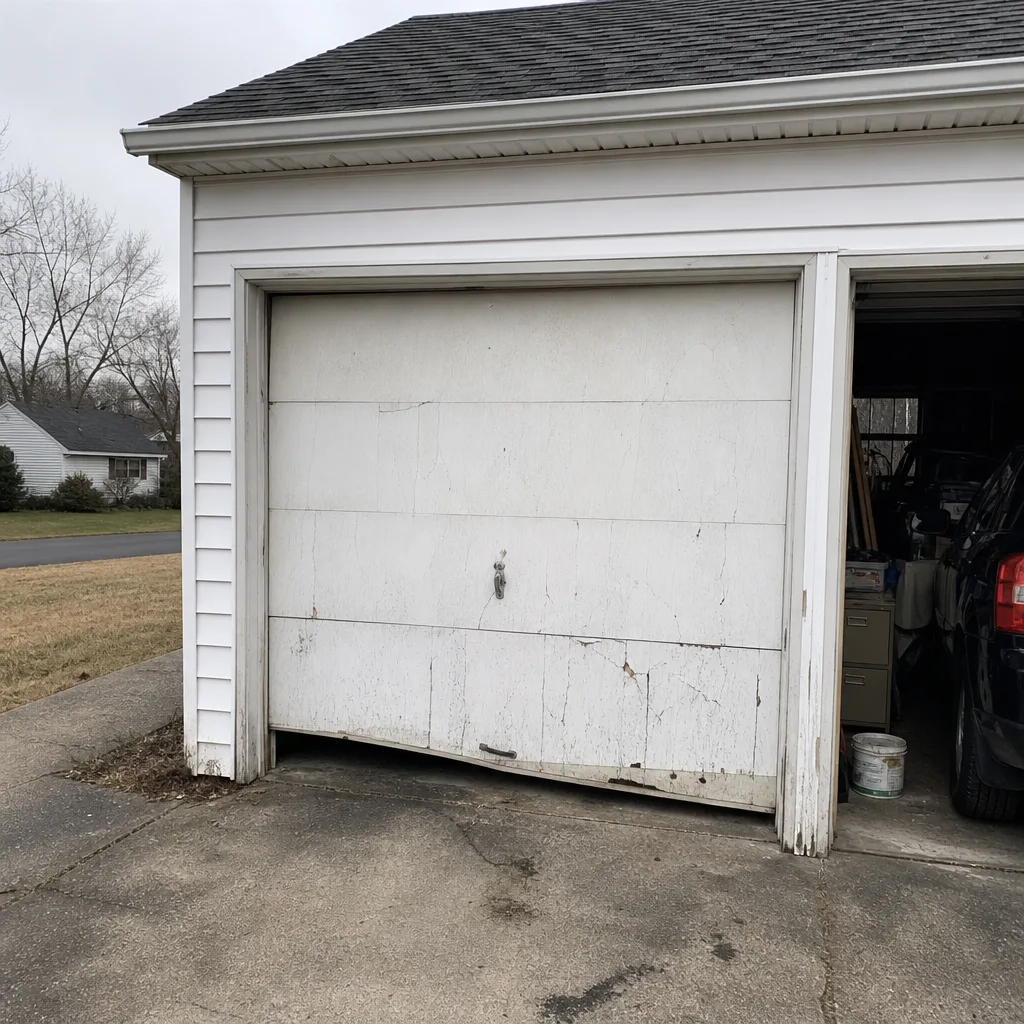 Before
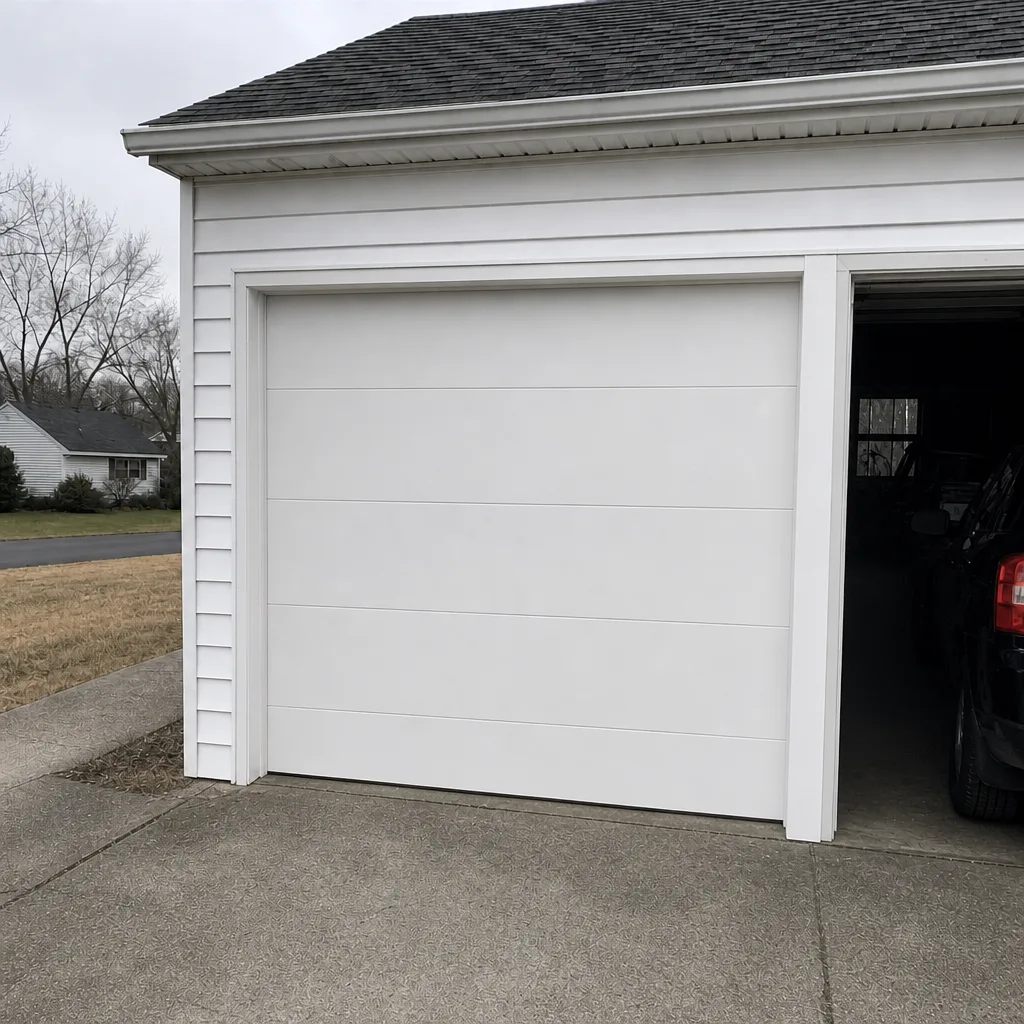 After
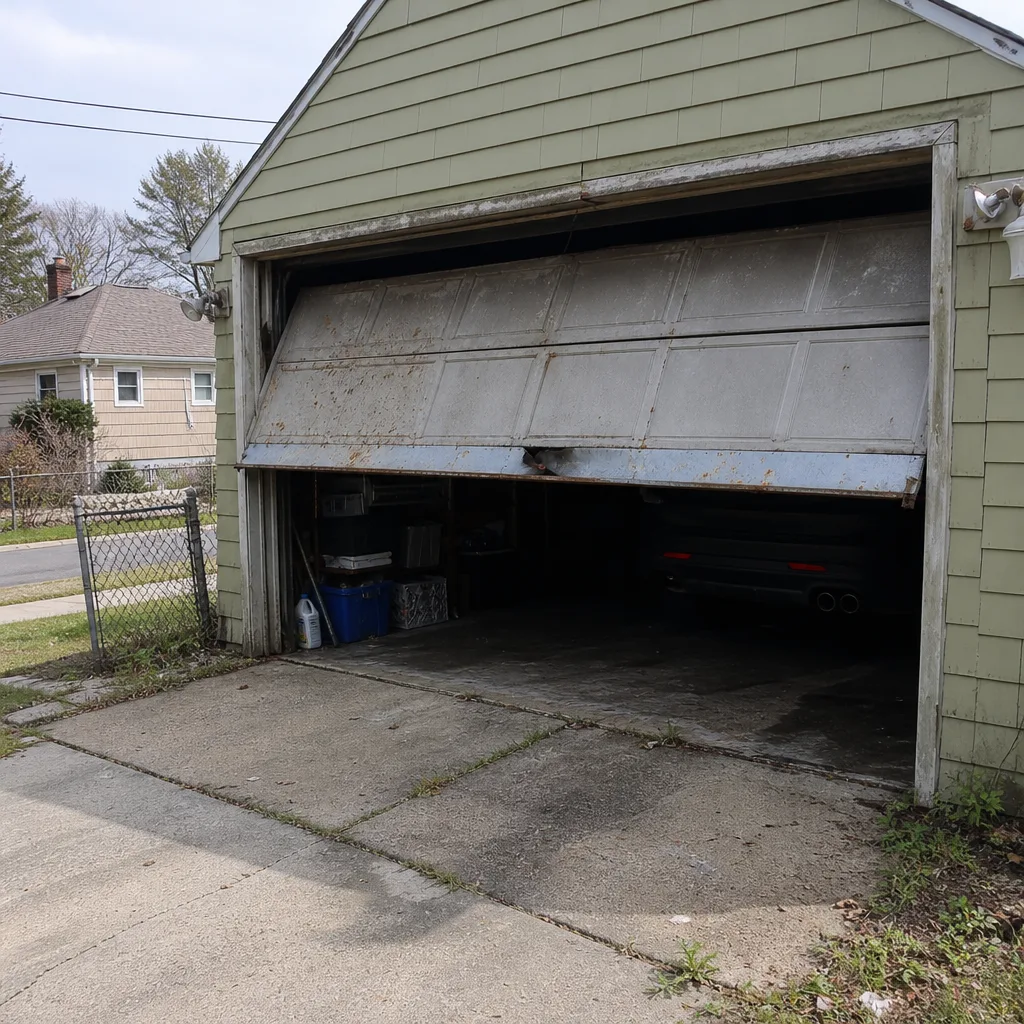 Before
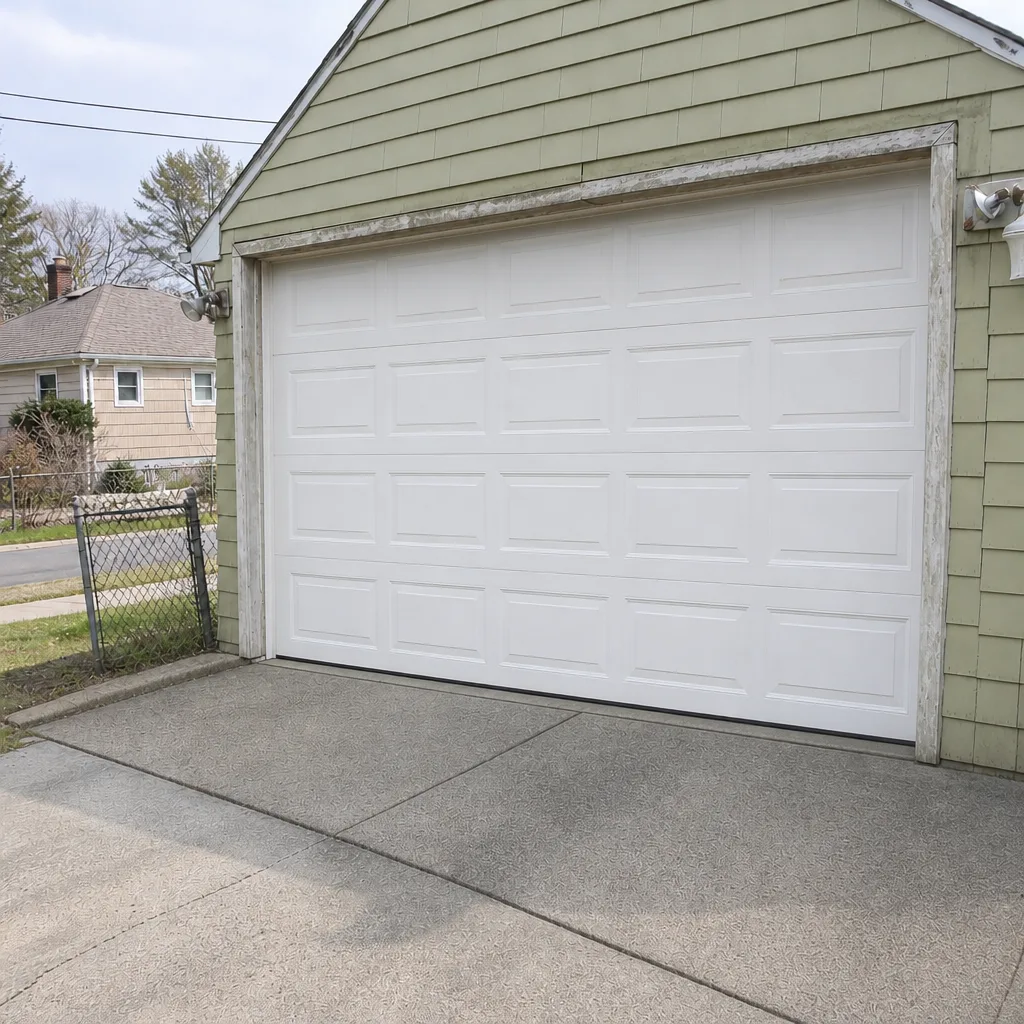 After
When to Call a Professional
Some problems on this page you can fix yourself. Others you shouldn’t touch, no matter how handy you are. The stop-and-call list is short and specific: a broken torsion spring, a frayed or snapped cable, a bent or misaligned track, an opener that reverses on the way down after you’ve confirmed the sensors are clean and aligned, and a door that hangs crooked or drops on its own during the balance test.
If you’re unsure whether your issue qualifies, call (877) 792-6059. We answer 24/7. Fast dispatch from 7am to 7pm, Sunday through Friday. Brick Garage Door Repair offers free estimates in Brick Township, and our technicians work on the brand you already own rather than pushing a replacement. Spring repair is handled in-house because it’s the most demanding job in the trade, and our technicians have up to 8 years of experience across the major brands.
Frequently Asked Questions
Spring repair in Brick Township typically costs $180 to $340 for a single spring. A matched pair is usually replaced together, so a pair typically runs about twice that, around $360 to $680. Your written estimate sets the final price, and it’s quoted and agreed before any work starts. Call (877) 792-6059 for an exact quote. Estimates are free.
Yes, in most cases. Same-day service is available for stuck or broken doors, and fast dispatch runs from 7am to 7pm, Sunday through Friday. Call (877) 792-6059 and describe what you’re seeing. We answer 24/7. A call outside dispatch hours is booked into the next opening, Sunday through Friday, 7am to 7pm.
No, the price you agree to in the written estimate is the price. We quote and agree the price before any work starts, so there are no surprises when the invoice arrives. If we find something additional during the repair, we’ll talk it through with you before doing anything. Call (877) 792-6059 for a free estimate.
The local professional we connect you with is licensed and insured as their state requires. Spring repair and cable work are done by trained technicians, not passed off to a subcontractor. Call (877) 792-6059 to book an appointment.
That’s almost always a sensor issue. Check that both sensor LEDs are lit, wipe the lenses, and confirm nothing is blocking the beam. If the sensors are clean and aligned and the door still reverses, the issue is likely a force setting or wiring, and that’s a job for a technician. Call (877) 792-6059 and we’ll get it sorted.
No. A torsion spring under load can cause serious injury, and this is not a homeowner repair. Stop and call a technician. We handle garage door spring repair in-house with the right tools and training. Call (877) 792-6059 for a free estimate.
The Bottom Line
Most garage door problems in Brick Township fall into one of five categories: opener, spring or cable, track and roller, panel, or sensor. Knowing which category you’re in tells you immediately whether you have a safe DIY check or a stop-and-call situation. The tests you can run yourself are the manual disconnect, the balance test, the sensor light check, and a remote battery swap. The ones you must never attempt are spring tension, cable replacement, and track straightening. Living near the Shore means hardware wears a bit faster in Brick Township, so a yearly look at your rollers, cables, and springs is worth the time. When in doubt, Brick Garage Door Repair offers free estimates and a clear answer. Call (877) 792-6059. We answer 24/7. Fast dispatch from 7am to 7pm, Sunday through Friday.
Related Reading
Looking for more on garage door opener repair or a full garage door repair for your Brick Township home? Our team covers the full lifecycle, from a snapped spring to a brand-new door. Built solid, done right.
Written by the team at Brick Garage Door Repair.