
Last updated November 22, 2026
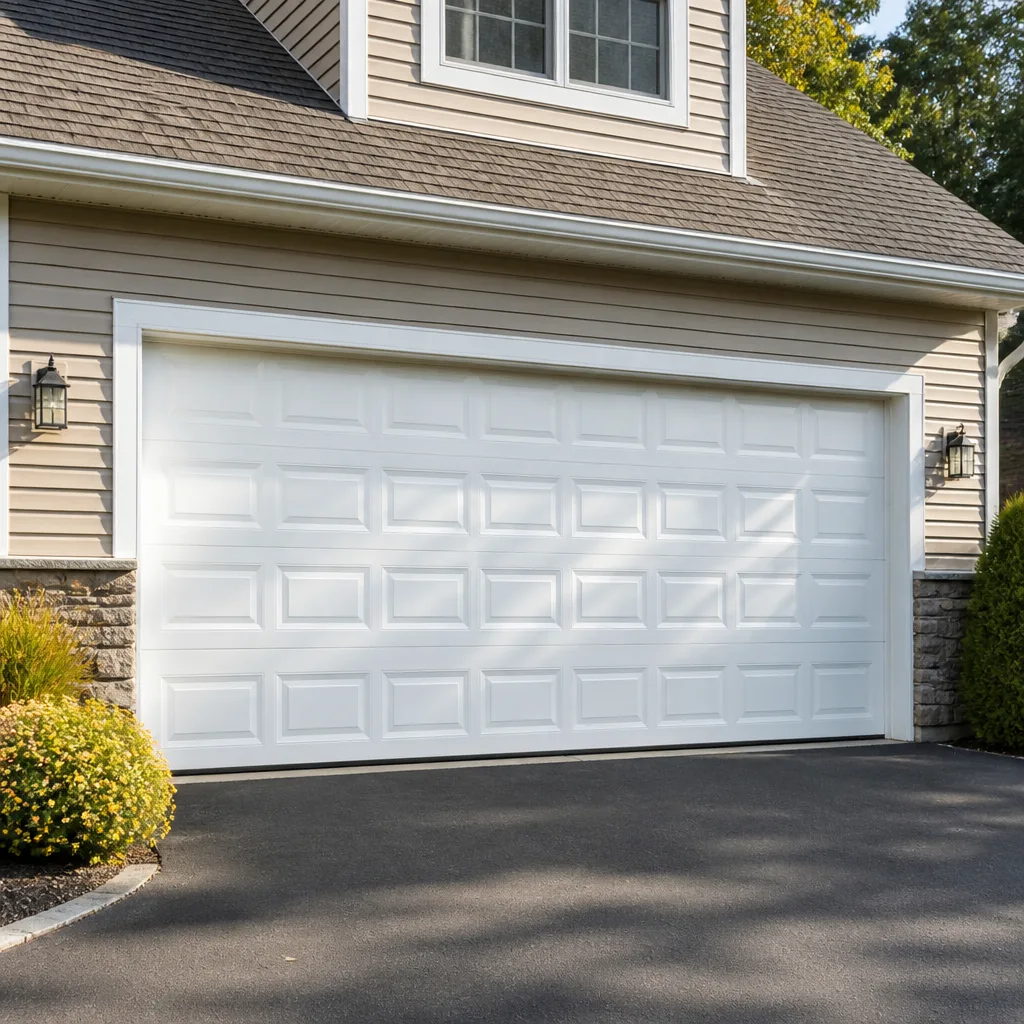 Raised-panel steel
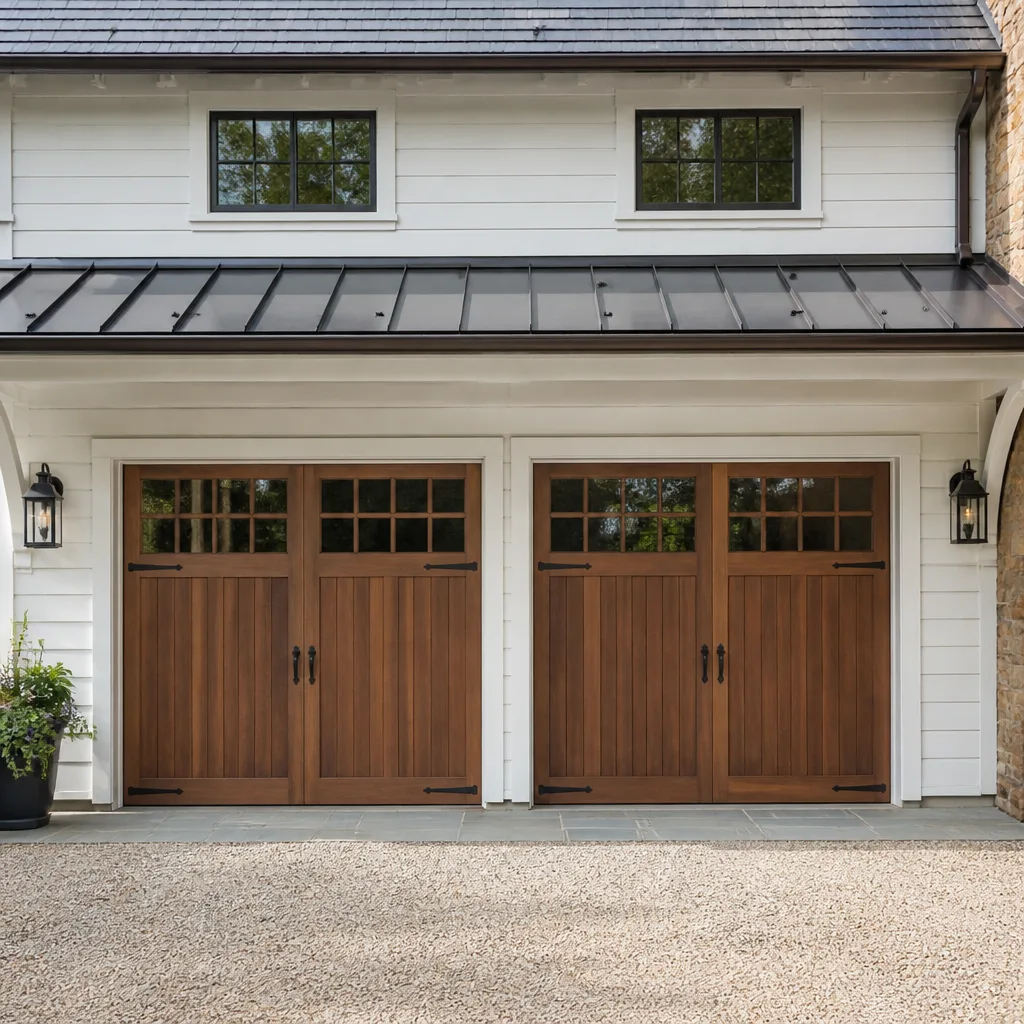 Carriage house
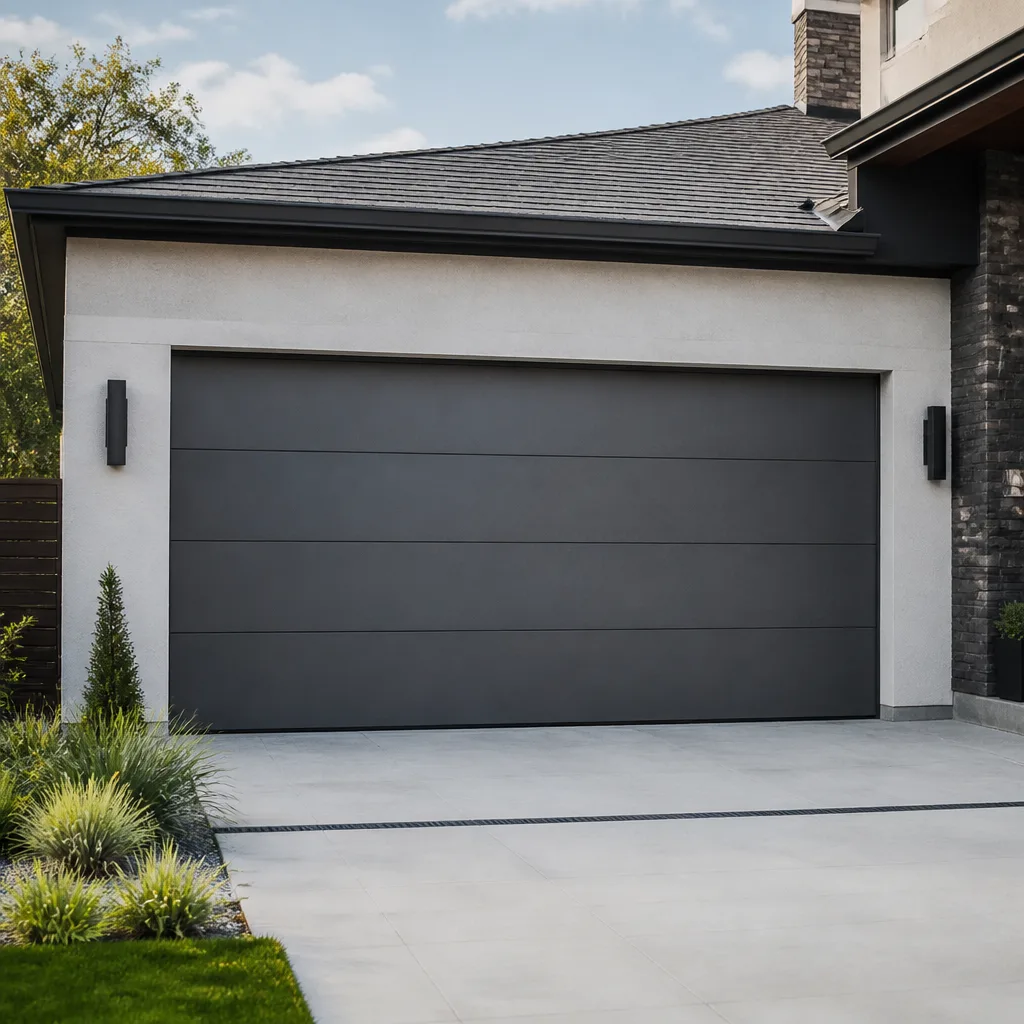 Modern flush
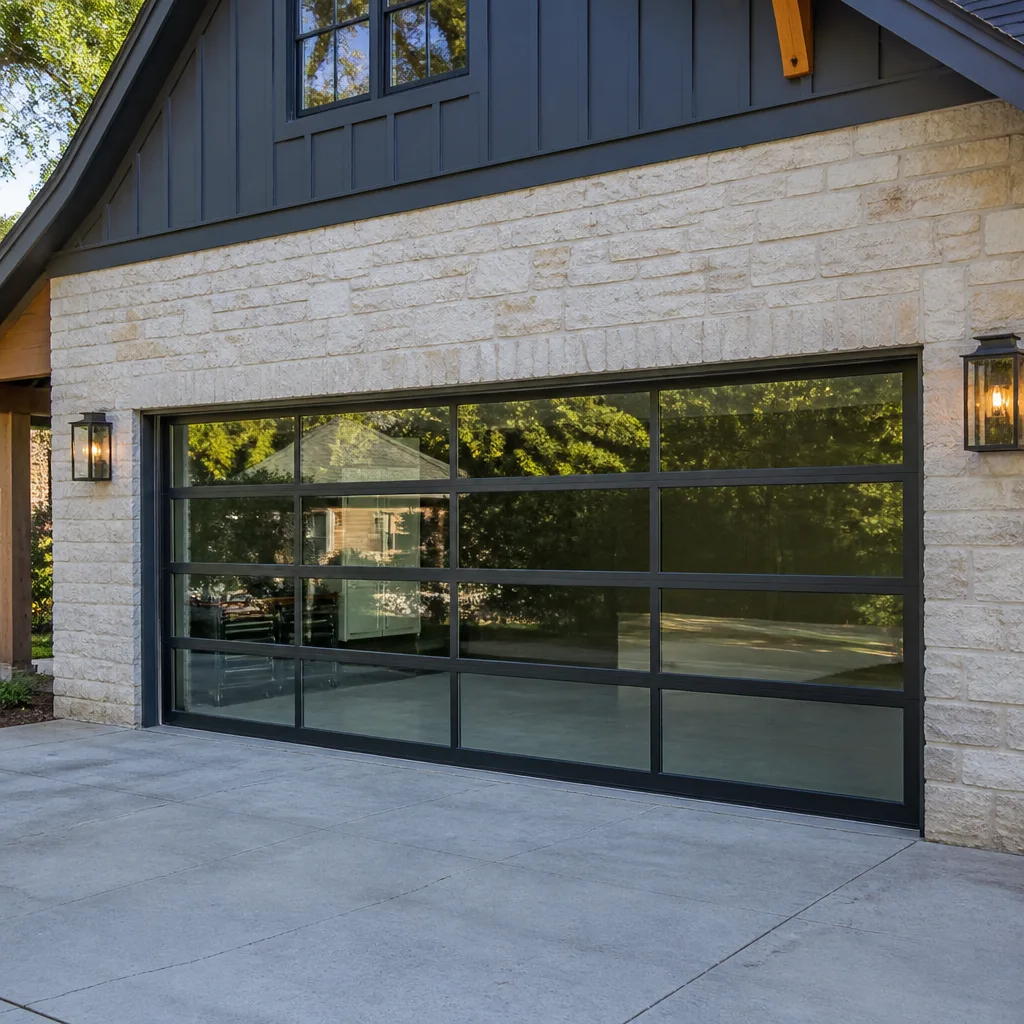 Full-view glass
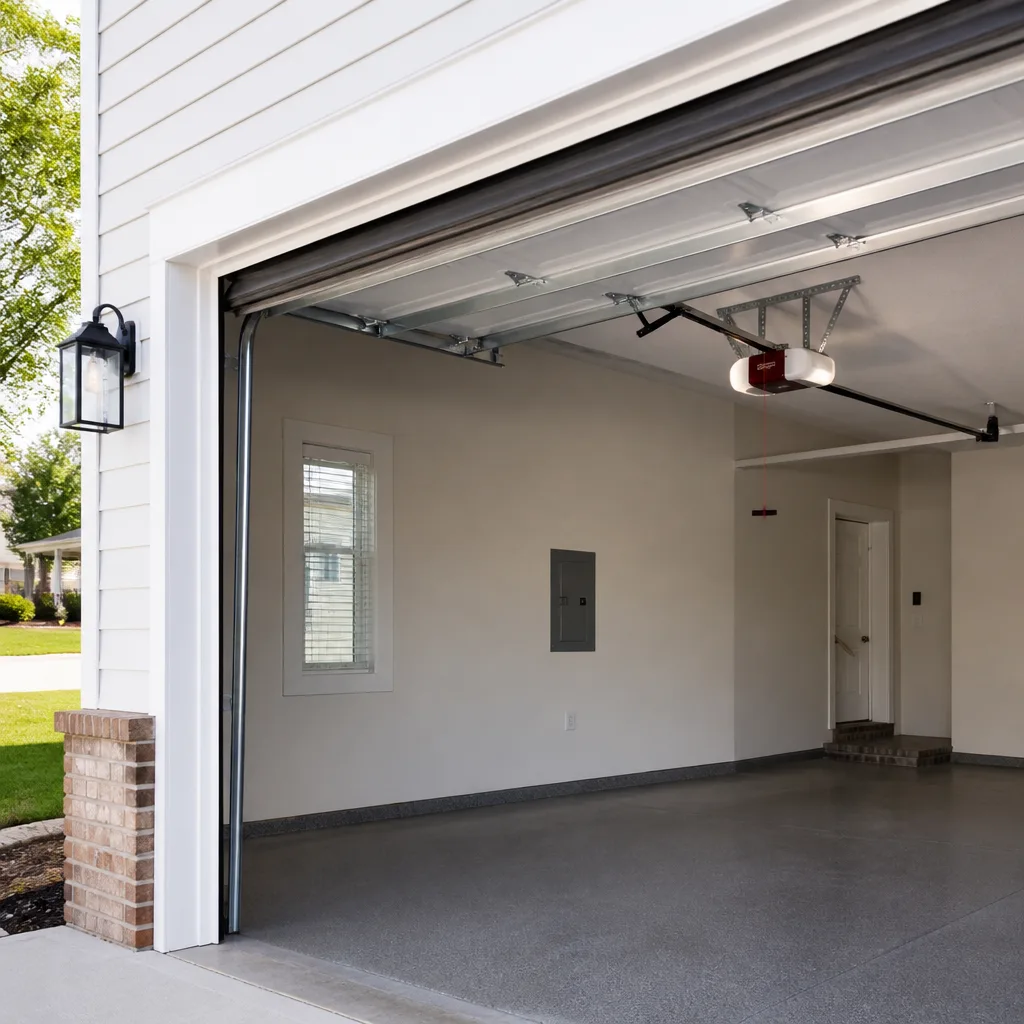 LiftMaster openers
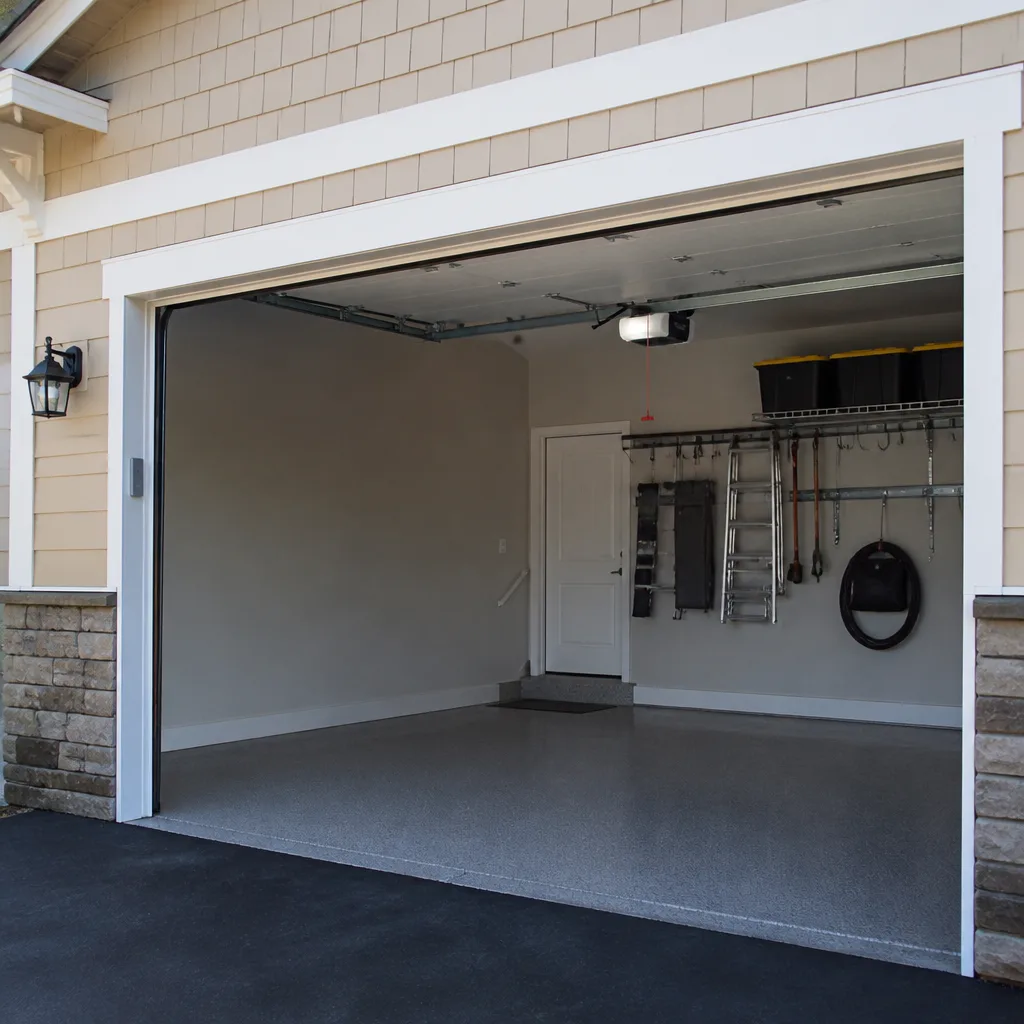 Chamberlain openers
Full 25-point door and opener safety check with every visit - springs, cables, rollers, tracks, and your LiftMaster or Chamberlain opener included
You get a price before we start. It does not change when the pro arrives.
Get your free estimateSeasonal Garage Door Care for Brick Township: Year-Round Homeowner’s Guide
Most homeowners blame the cold for a broken spring. The cold gets the blame, but the damage was already done. Winter only delivers the last hit to metal that’s spent months being worn down by heat, damp, and the swing between freezing and thawing that defines a Brick Township year. A garage door is asked to hold a seal, carry weight, and open and close smoothly through all four seasons – and each season leaves its own mark. This guide breaks the year into seasons and tells you what to check in each, so you catch the wear before it turns into a snapped spring, a stuck door, or a car trapped behind a panel that won’t lift.
Quick Answer
Seasonal garage door care in Brick Township comes down to a four-part rhythm: check springs, hardware, and the bottom seal in spring after winter has taken its toll; watch wood and composite panels for swelling in summer humidity; lubricate moving parts and test the emergency release before nor’easter season in fall; and inspect springs, rollers, tracks, and opener force settings before the first hard freeze. Homeowners who do a short inspection each season catch most failures weeks before they happen.
Styles & brands we work with
- Raised-panel steel
- Carriage house
- Modern flush
- Full-view glass
- LiftMaster openers
- Chamberlain openers
Table of Contents
- Spring Post-Winter Audit: Five Parts That Take the Most Damage
- Summer Humidity and Wood-Composite Panels: When to Act
- Fall: The Highest-Corrosion Window in Brick Township
- Pre-Winter Torsion Spring Inspection for Ocean County Cold
- Nor’easter Prep: How It Differs From Standard Storm Prep
- What You Should Never Adjust Yourself
- Your Brick Township Garage Door Calendar
Spring Post-Winter Audit: Five Parts That Take the Most Damage
By the time the ground thaws, your garage door has run through months of the worst conditions it will see all year. Between November and March in a coastal New Jersey setting, a door opens against cold-stiffened grease, closes onto a bottom seal packed with grit, and sits through repeated freeze-thaw cycles that push moisture into every seam. The result is a handful of components that wear faster than the rest. Check these five first, in this order.
- Torsion or extension springs. Look for gaps, rust blooms, or a stretched, uneven coil. A torsion spring should look uniform from one end to the other. Any visible rust streak on a painted spring is worth a closer look.
- Bottom weatherstripping. The seal along the floor takes the most abuse. Feel for cracks, flattening, or gaps at the corners. A worn seal lets water and cold air in and is a common reason doors start sticking.
- Rollers. Steel rollers often develop flat spots over winter; nylon rollers can crack in cold. A door that shudders or jerks as it moves usually has a worn roller or two.
- Hinges and fasteners. Loose hinge screws and bolts loosen further with each freeze-thaw cycle. Snug them, but don’t overtighten – stripped holes are harder to fix than loose screws.
- Horizontal tracks. The rails a door rides on should be straight and parallel. A knock from a car or a winter storm can bend them enough to cause binding.
Doing this audit in late March or April in Brick Township gives you the whole warm season to fix what you find before the next cold snap arrives. It’s a thirty-minute walk-around for most homeowners, and it catches the failures that no amount of winter luck would have prevented.
Summer Humidity and Wood-Composite Panels: When to Act
Summer humidity in Brick Township is the quiet threat. Wood and wood-composite garage doors absorb moisture through their edges and joints, and when the air is thick for weeks at a time, the panels swell. A door that was tight in May can start to bind, rub, or catch on its own frame by August. The swelling isn’t always obvious from the driveway – the first sign is often a door that opens with a new squeak or sits slightly uneven against the jamb.
What to look for as humidity rises:
- Panels that bow or cup. Lay a straightedge across a panel. If it rocks or shows a gap, the wood has moved.
- Paint or stain that’s peeling at the bottom edge. Moisture wicks up from the ground and pushes the finish off from behind, especially at panel bottoms and corners.
- Doors that drag or bind in the tracks. A swelling panel is thicker than it was, and if it’s pinched between the tracks, the opener will work harder each time.
- Paint blisters or soft spots. If a fingernail sinks into the panel, the material is holding water and needs attention now, not next spring.
Acting early on swelling prevents permanent warping. A coat of exterior-grade paint or stain on clean, dry wood slows moisture uptake. If a door already binds, the fix may be as simple as adjusting the track or as involved as replacing a panel – a call we’d sooner make before August than after. For wood and composite doors in particular, we suggest an annual summer check on panel edges. Doors from makers like Clopay and Amarr are built to take humidity, but every wood-composite system benefits from a yearly look at the finish. If you notice a panel that’s already warped beyond adjustment, a garage door repair visit is the right call before the swelling turns into a cracked panel or a jammed door.
Fall: The Highest-Corrosion Window in Brick Township
October and November are the highest-corrosion months of the year for garage door hardware in Brick Township. The reasons add up: humidity from summer lingers, temperatures swing between mild days and cold nights, and the air moving inland carries more moisture onto bare metal and hinges than at any other point in the year. Every latch, hinge, roller stem, and torsion spring is exposed to that air, and the parts that go longest without lubrication corrode first.
One lubrication pass in October does more for your door than months of spot fixes. The rule is simple: on this schedule, use a garage door lubricant – not WD-40, which is a cleaner, not a lasting lubricant – and apply it where metal moves on metal.
- Springs. A light coat along the coils. Never touch a torsion spring under tension – the lubricant goes on the coil surface where the spring touches its drum.
- Hinges. A drop at each pivot point. Wipe away any excess so it doesn’t attract grit.
- Rollers. A drop on the bearing of each roller, not on the track itself.
- Bearings and the opener rail. A small amount on the center bearing plate and the opener’s trolley rail, per your opener manual’s guidance.
- Lock and latch. A drop in the keyhole and on the latch pivot helps in cold weather.
A door that gets this lubrication pass in fall starts winter with a protective film over its moving parts. That’s the single simplest thing a homeowner in Brick Township can do to slow corrosion through the cold months, and it costs a few minutes and a can of lubricant.
Pre-Winter Torsion Spring Inspection for Ocean County Cold
The tension on a torsion spring is what makes your door feel weightless, and that tension is exactly what causes a cold-morning snap. A spring that’s already carrying a little corrosion loses its strength unevenly. As temperatures drop, the metal contracts and the stress concentrates on the weakest part of the coil – and that’s where the spring fails. In Ocean County, where winter temperatures regularly swing below freezing, a fall inspection that catches the wear before the cold does is the best protection you can give a door.
What a pre-winter check looks like for a torsion system:
- Look at the spring surface. Rust streaks, pitting, or a gap in the coil are all signs the spring has used up its working life. Any of these is a reason to have a trained professional look at it.
- Test the door’s balance by hand. Lift the door about halfway with the opener disengaged, then let go. If it drops or rises on its own, the tension is off or the spring is on its way out.
- Listen. A door that booms or shudders when it opens or closes is telling you the spring and door aren’t working together.
- Check both springs, not just one. A door with two springs is designed to balance them; if one is failing, both are aged. In our experience, a matched pair is usually replaced together rather than one at a time.
Springs are the most dangerous part of a garage door, and a torsion spring under tension stores enough energy to cause serious injury if it’s mishandled. We treat them that way: adjusting tension or replacing a spring is a job for trained technicians with the right tools, not a homeowner with a pair of winding bars from a hardware store. If your fall inspection turns up any of the signs above, garage door spring repair is the step to take, and it’s best done before the first freeze in Brick Township rather than after it. Every year without a spring check is a year of accumulated risk, and the coldest morning is not the one you want to find out.
Nor’easter Prep: How It Differs From Standard Storm Prep
Storm prep for a house normally means securing loose objects and clearing gutters. Garage door preparation is different, because a door is a large moving panel with a lot of surface area. A nor’easter brings wind-driven rain and abrupt pressure changes that find every weak point in a door’s seal and hardware. The preparation you need is about strength and sealing, not just tidying.
Threshold seal integrity
The bottom seal is the door’s first line of defense. Before storm season, run a hand along the floor line with the door closed. Any daylight or draft through the seal is a place wind and water will enter. If the seal is worn, replace it before the storm, not after. A tight seal keeps water off the floor and cuts down on air pressure finding its way under the door.
Horizontal track bracket torque check
The brackets that hold the horizontal tracks to the wall and ceiling take the load of the door during wind. Loose brackets let the door shift under pressure. Check each bracket and bolt with a wrench, snugging anything loose. Don’t overtighten into soft wood – if a lag bolt spins freely, it needs a larger fastener or a new hole, which is a job best handed to a technician.
Emergency release testing
The manual release cord is what lets you open the door by hand if the opener fails or the power goes out. Test it before storm season: pull the red handle with the door closed and confirm the door moves freely by hand, then re-engage it. A release that’s stuck or a cord that’s tangled is one more thing to fix before the power drops, and a door you can’t open by hand is a door that can trap you when the opener won’t run.
If a nor’easter takes out your opener or damages a panel, we’re the call homeowners make when a broken door traps a car or leaves the house open. We answer 24/7 and dispatch fast from 7am to 7pm, so a storm-timed failure gets handled. A door that’s already weak before the storm is a door that won’t hold – and prep in the fall costs less than a garage door opener repair after the power’s out.
What You Should Never Adjust Yourself
There’s a clear line between what a homeowner can safely check and what belongs in the hands of a trained technician. On one side: the spring inspection, the lubrication pass, the seal check, the balance test. On the other: anything involving stored tension, electrical wiring, or the door’s overall balance. Crossing that line can injure you badly.
Never do these yourself:
- Adjust torsion spring tension or replace a spring. Springs are under enough tension to cause serious injury. This is the job we treat with the most care, and it’s why spring work is done by trained technicians, not passed off to a subcontractor.
- Disconnect or rewire the opener’s electrical connections. The opener is tied into household power, and wiring mistakes can shock or damage the system. A qualified technician handles this.
- Bend or straighten a bent track by force. A track that’s out of alignment can be adjusted, but a homeowner swinging a hammer on it can crack the rail or bend the door panel.
- Change the opener’s force or travel limits on a guess. Force settings that are too high can crush an obstacle; too low and the door reverses on its own. Adjusting them without the right setup invites the very failures you’re trying to prevent.
- Force a stuck door open. If the door won’t move, something is binding. Forcing it can crack a panel, snap a spring, or damage the opener – and can drop the door on you.
A trained technician knows how to check any of these safely. That’s why our technicians have up to 8 years of experience with the major brands – Genie, LiftMaster, Chamberlain, Clopay, Amarr, Wayne Dalton, Craftsman, and Raynor – and fix the system you already own instead of pushing a replacement.
Your Brick Township Garage Door Calendar
Here’s the year at a glance. Revisit this schedule each season and you’ll stay ahead of the failures that rush a homeowner into an emergency call.
| Season | Main Tasks | What to Watch For |
|---|---|---|
| Spring (March-May) | Post-winter audit: springs, bottom seal, rollers, hinges, tracks; tighten fasteners | Rust on springs, cracks in the floor seal, a door that shudders or jerks, loose hinge screws |
| Summer (June-August) | Check wood-composite panels for swelling; inspect and refresh paint or stain on edges | Panels that bow, bind, or drag; paint peeling at the bottom edge; soft spots |
| Fall (September-November) | Full lubrication pass on springs, hinges, rollers, bearings, and opener rail; test emergency release; balance test | Rust blooms on hardware, a door that won’t stay halfway by hand, a stuck release cord |
| Winter (December-February) | Pre-winter spring inspection; threshold seal and track bracket check before storms | Gaps under the seal, loose track brackets, any new boom or shudder on open/close |
The calendar is simple, but it only works if you actually walk out and look. A door that gets one planned look each season gives you warning before the expensive failure. A door that gets none waits until it breaks.
Common Mistakes to Avoid
- Waiting for a break to act. A spring that snaps on a January morning didn’t fail overnight. The corrosion was there for months. Seasonal checks find it while it’s still a nuisance instead of an emergency.
- Skipping the fall lubrication pass. Fall is the highest-corrosion window in Brick Township, and a fresh coat of lubricant that month does more than a dozen spot fixes later. Homeowners who skip it often pay for it in January.
- Ignoring a swelling wood panel. Humidity in July and August can quietly warp a composite door. Checking it in early summer rather than after it stops closing saves a panel.
- Greasing the tracks. Lubricant on the tracks attracts grit and makes the door grit up. Lubricate the rollers and moving metal, not the rail surface, and wipe away any excess.
- Adjusting spring tension by trial and error. A torsion spring holds stored energy, and guessing at tension can drop a door or snap a spring. This is trained-technician work, not a weekend project.
- Using a general handyman for a spring or opener problem. A brand-specific specialist knows the failure modes of your system – whether it’s a Genie or a Clopay – and the right fix rather than a generic one. A generalist guessing on a spring can cost you more than the corrected job.
- Forgetting the emergency release. A release that’s tangled or jammed is a hazard during a power outage. Test it in fall, not during a storm.
See the difference
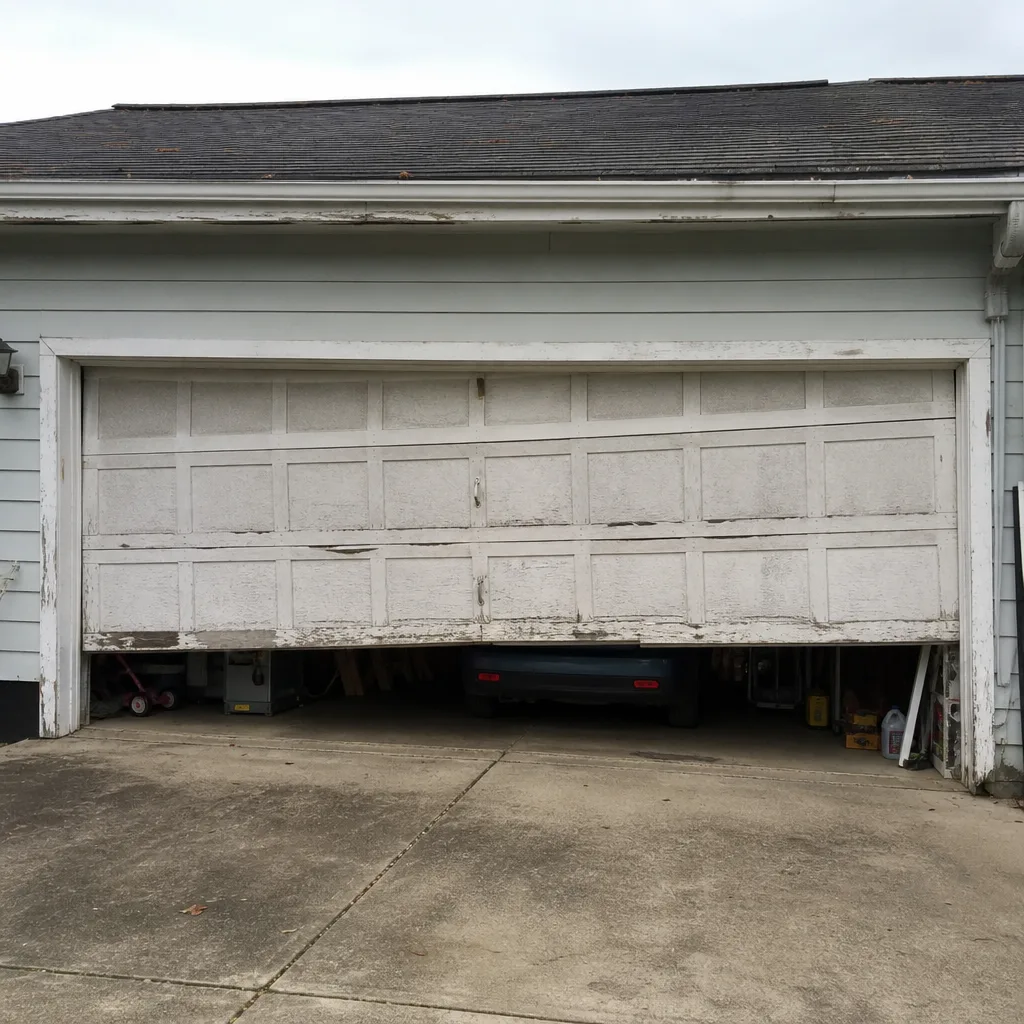 Before
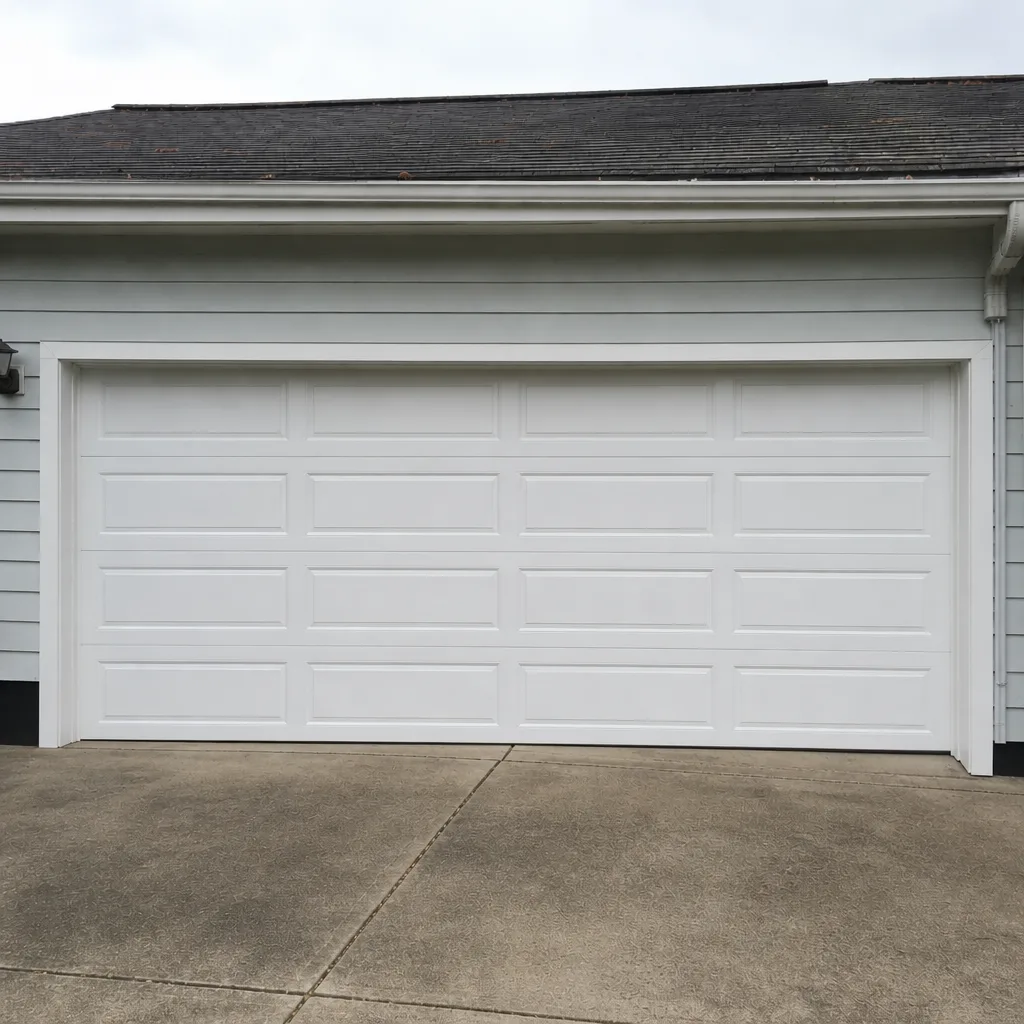 After
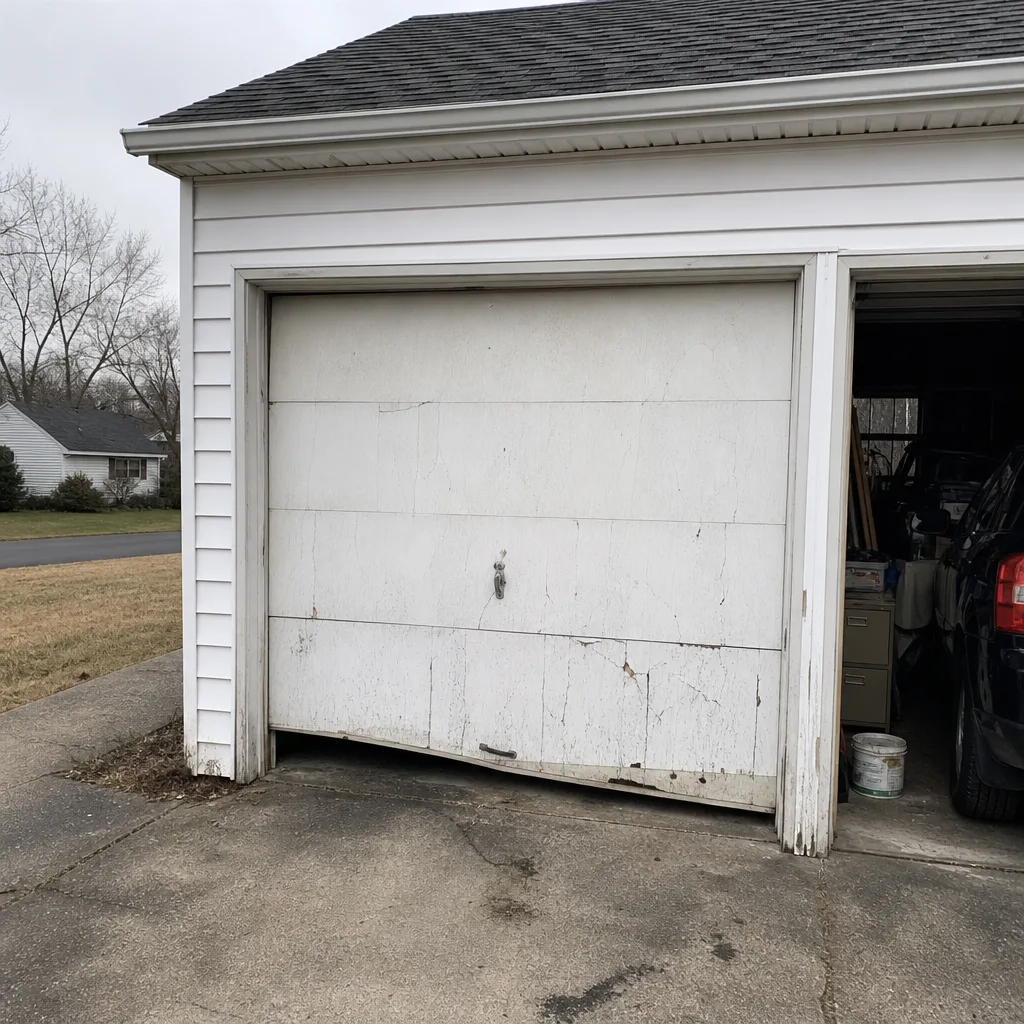 Before
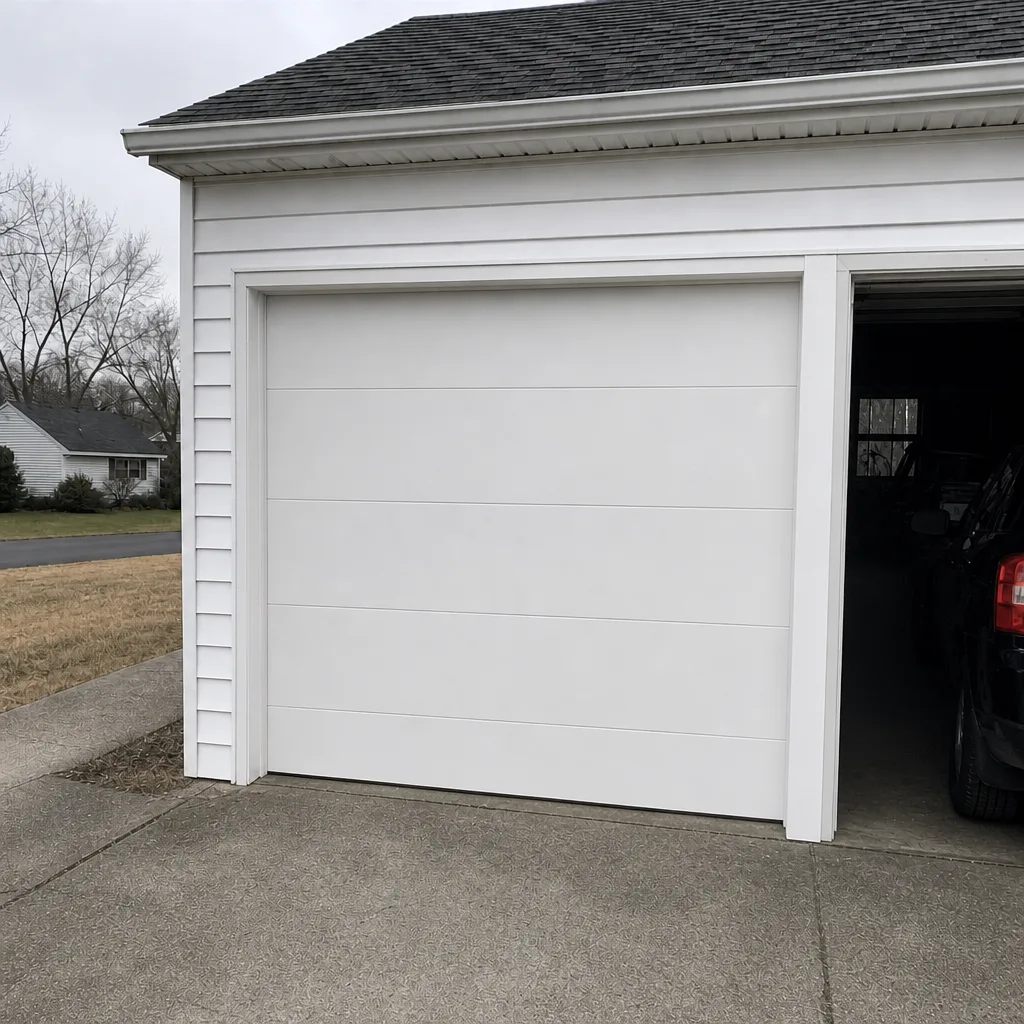 After
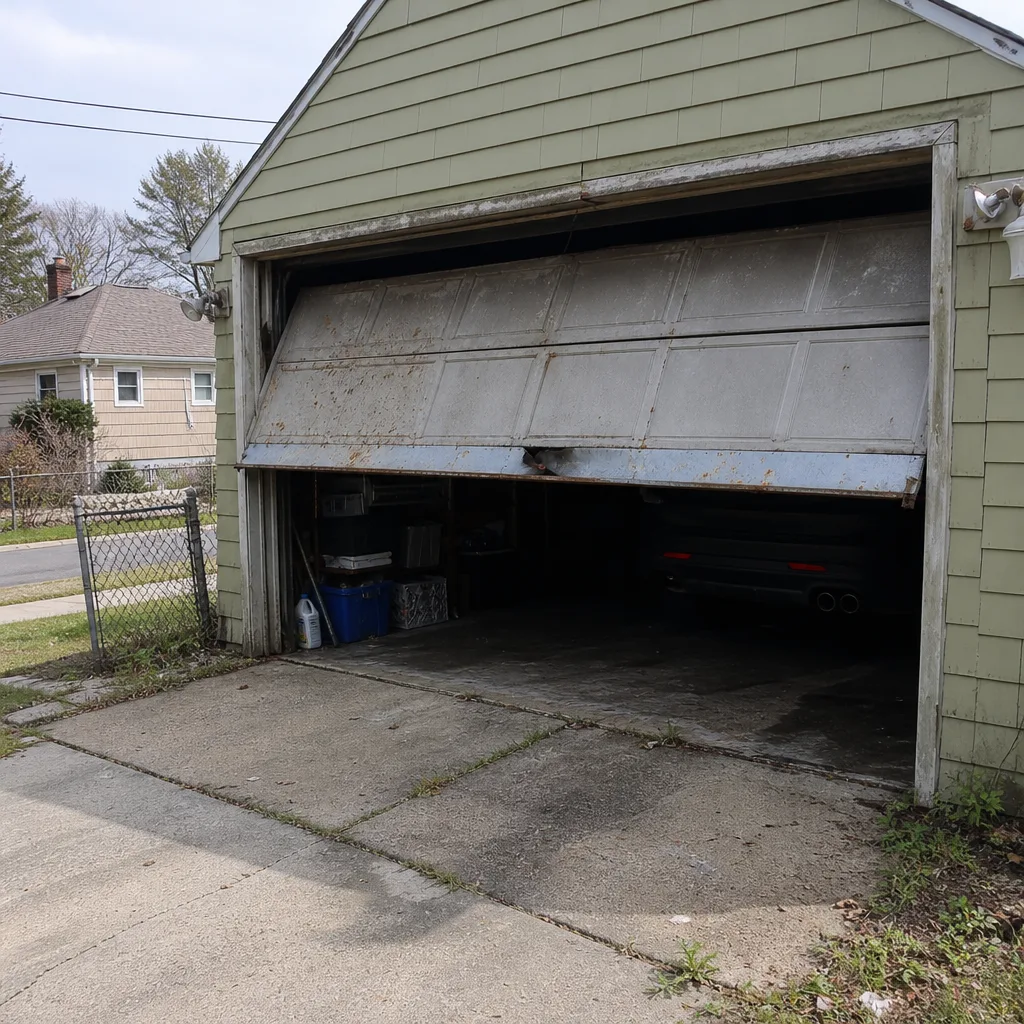 Before
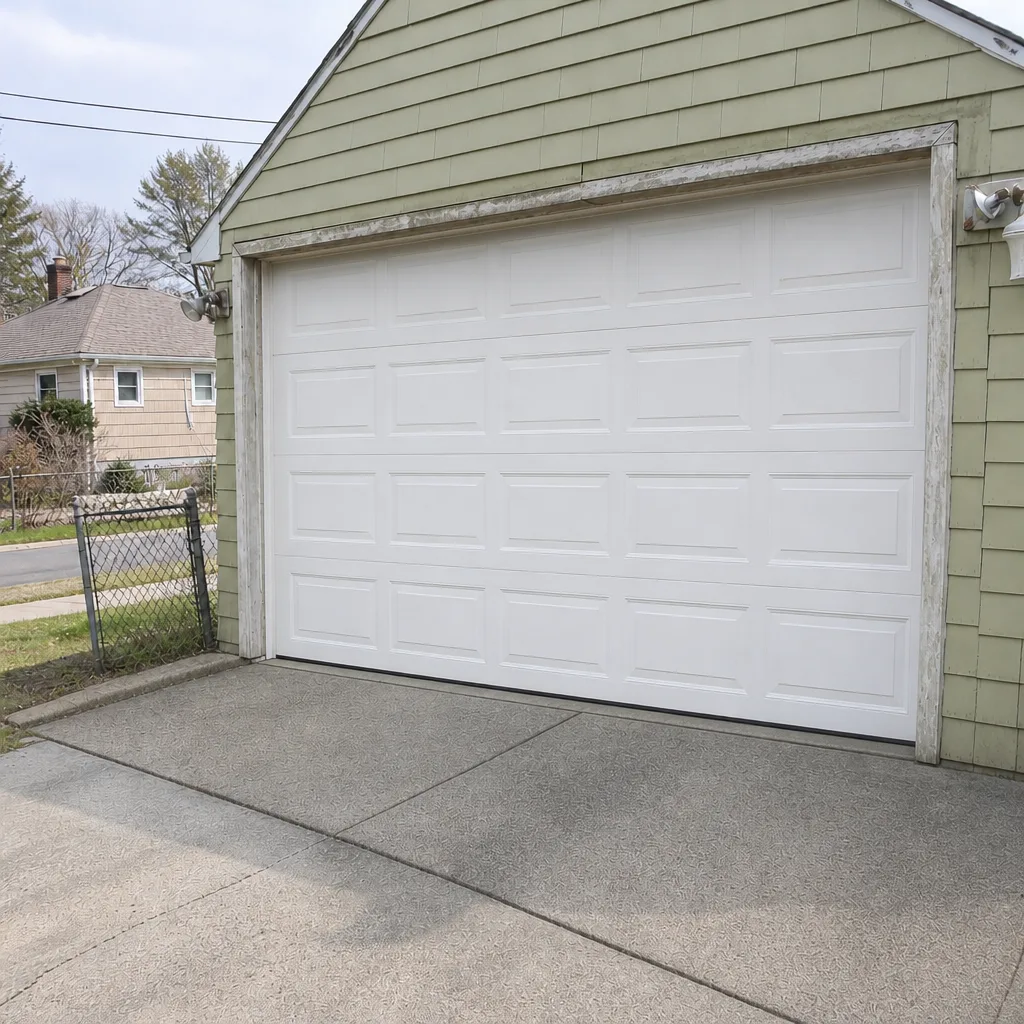 After
When to Call a Professional
Some checks are yours. Others have a clear professional line, and the smartest homeowners call before the failure, not after. Call a professional if you see a spring with rust streaks, gaps, or pitting; if the door won’t stay halfway when you lift it by hand; if it booms or shudders when it moves; if it binds in the tracks; if the opener reverses on its own or won’t lift the door; or if a nor’easter is coming and you have any doubt about your track brackets, threshold seal, or emergency release. Each of these is a sign of wear that gets worse with time. Brick Garage Door Repair offers free estimates in Brick Township and works on the brand you already own – whether that’s a Genie opener, a Clopay or Wayne Dalton door, or any of the major systems. One call covers it all, from a snapped spring to a brand-new door. Call (877) 792-6059 and we’ll help you sort out what needs attention. Our technicians have up to 8 years of experience, and we can work with your insurer where needed.
Frequently Asked Questions
Four times a year – once per season – is the rhythm that keeps a door ahead of failure in Brick Township. The checks are short: a spring and seal look in spring, a panel and finish check in summer, a full lubricant pass in fall, and a spring and hardware inspection before the first freeze.
Cold weather doesn’t cause a spring to fail by itself. It delivers the last hit to metal that’s already weakened by corrosion, which builds up most in the fall humidity window. A spring that gets a fall inspection and lubrication is far less likely to snap on the coldest morning than one that doesn’t.
Yes, especially for wood and wood-composite doors. Panels absorb moisture and swell in humid months, and a swelling panel can bind in the tracks or warp if the finish has broken down. Check panel edges and the bottom paint line in early summer, before the swelling turns permanent.
Focus on strength and sealing, not just tidying the yard. Check the threshold seal for daylight or drafts, snug the horizontal track brackets, and test the emergency release with the door closed. If any of those feel weak or the door doesn’t move freely by hand, call before the storm rather than after.
No. A torsion spring stores enough energy to cause serious injury if it’s mishandled, and adjusting tension by guesswork can drop the door or snap the spring. Spring work is trained-technician work, and it’s one of the jobs we treat with the most care.
No inspection prevents every failure, but it catches most of them before they become emergencies. A door that gets a look each season tends to show its wear early – and early wear is cheaper and safer to fix than a door teaming up with a January morning.
Call (877) 792-6059 for an exact quote – estimates are free. We answer 24/7, and fast dispatch runs from 7am to 7pm, Sunday through Friday. A call outside those dispatch hours is booked into the next opening.
The Bottom Line
Four seasons, four different threats to a garage door in Brick Township. A spring-audit after winter catches the damage the cold leaves behind. A summer check on wood and composite panels catches swelling before it warps. A fall lubrication pass fights the highest-corrosion window of the year. A pre-winter spring inspection and nor’easter prep protect the door through the worst of the cold. Do the checks, keep the dangerous work in trained hands, and call early instead of late. That’s how a door stays solid instead of solidly broken. Brick Garage Door Repair is here when a check turns up something that needs professional hands.
Contact Us
If this guide has you wondering about your own door, get a free estimate from a company that specializes in garage doors and works on the brand you already own. Call (877) 792-6059 for a free estimate. We answer 24/7, and fast dispatch runs 7am-7pm, Sunday through Friday, closed Saturday. Built solid, done right – that’s what Brick Garage Door Repair stands for, from a broken spring to a brand-new door.
Written by the team at Brick Garage Door Repair.