
Last updated November 22, 2026
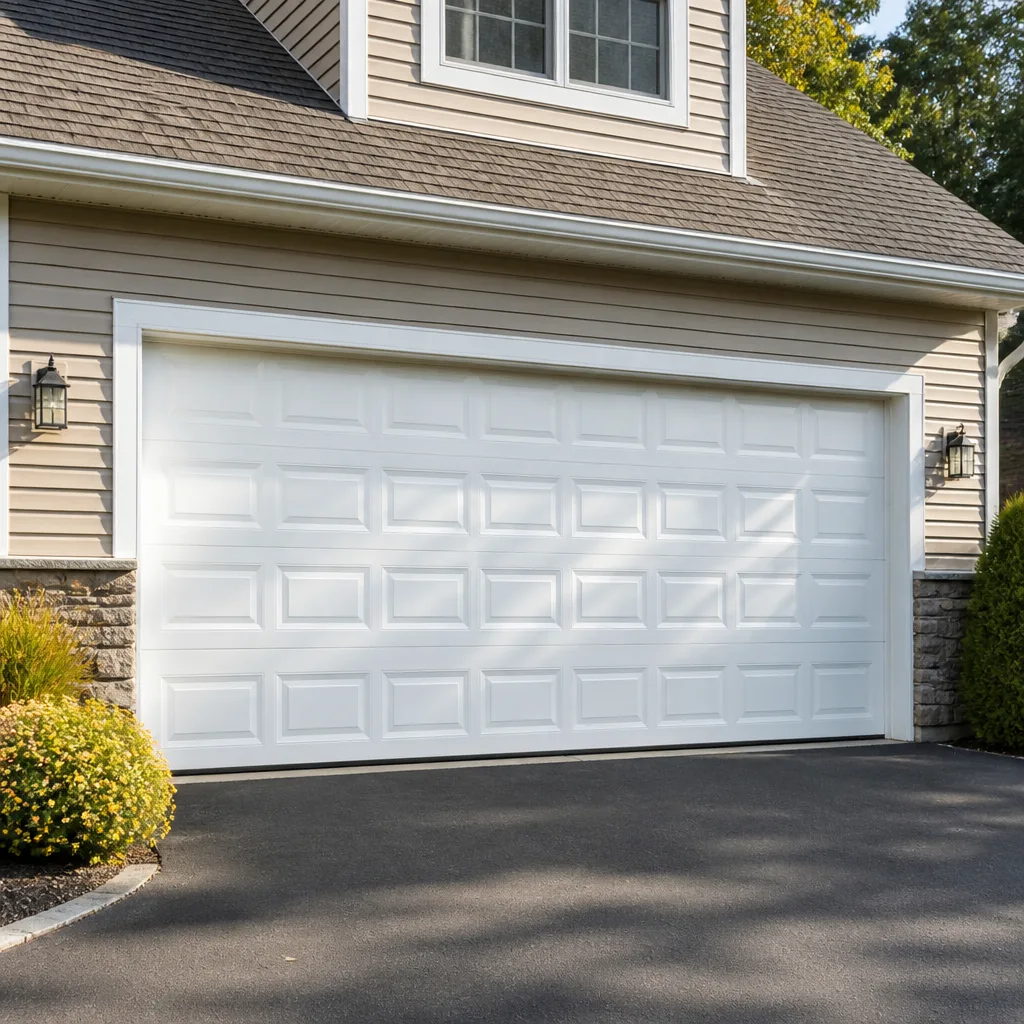 Raised-panel steel
 Carriage house
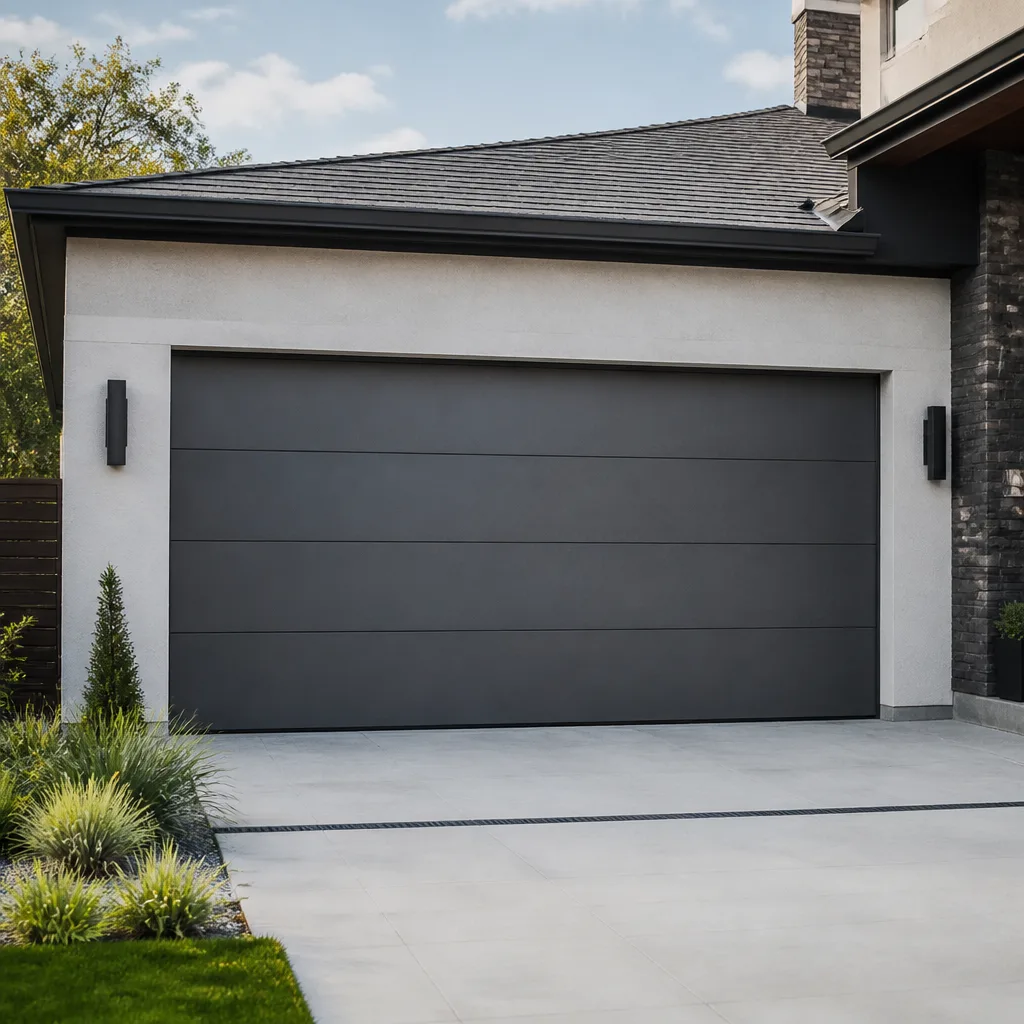 Modern flush
 Full-view glass
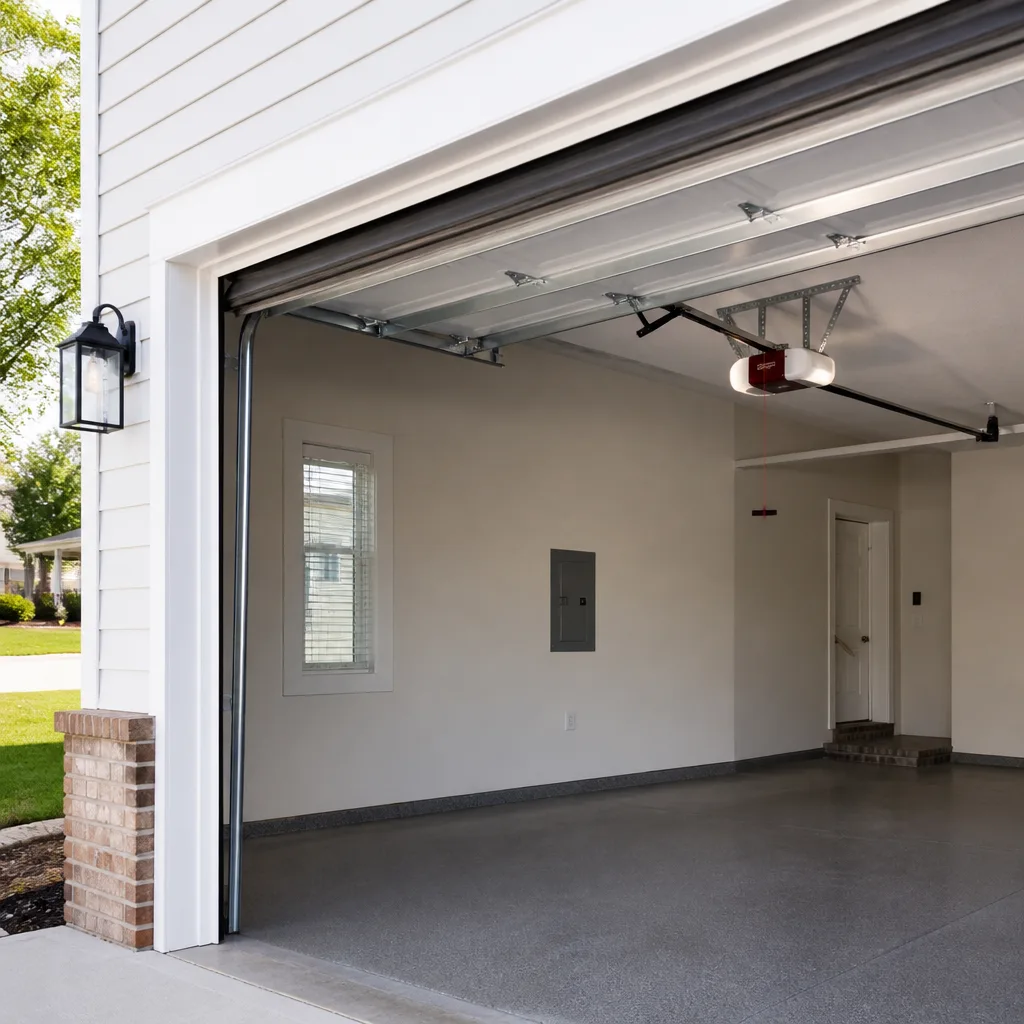 LiftMaster openers
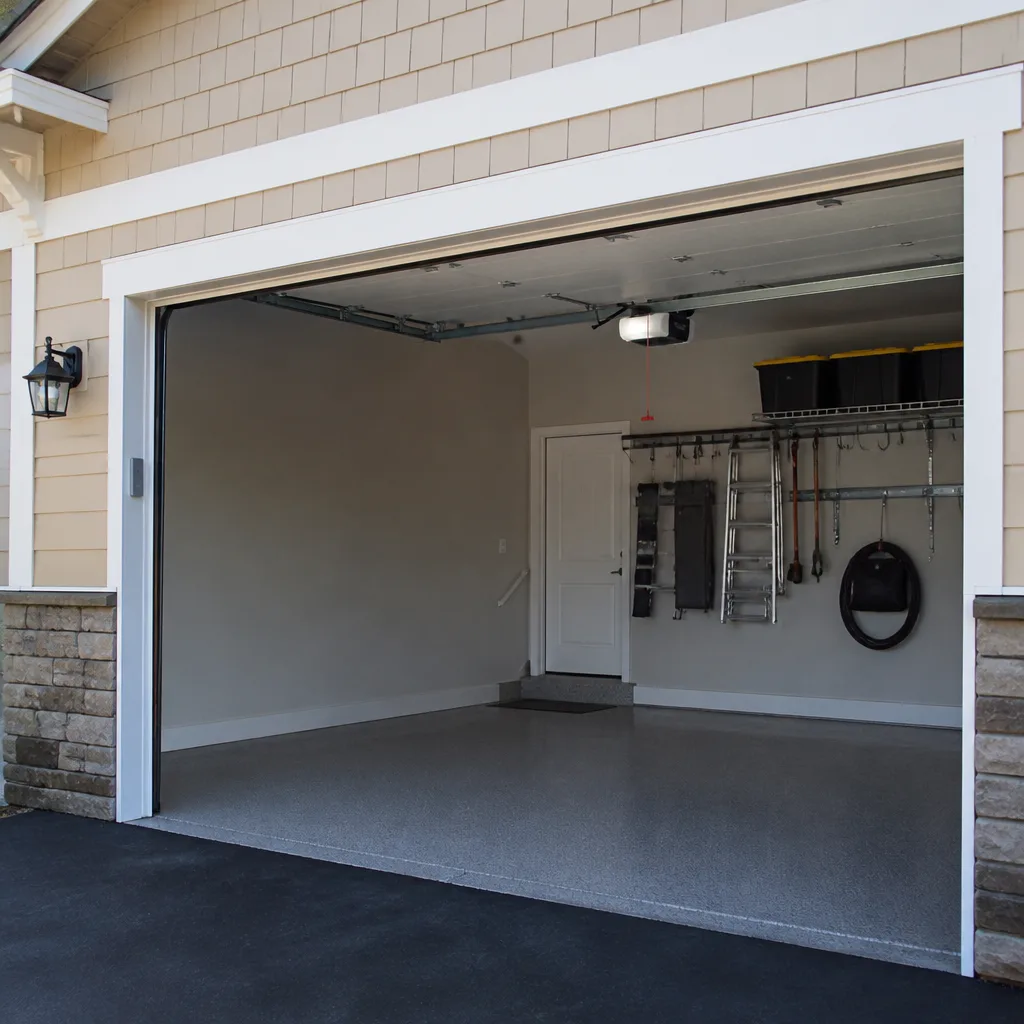 Chamberlain openers
Full 25-point door and opener safety check with every visit - springs, cables, rollers, tracks, and your LiftMaster or Chamberlain opener included
You get a price before we start. It does not change when the pro arrives.
Get your free estimateDIY vs Professional Garage Door: The Brick Township Homeowner’s Decision Guide
Most homeowners assume the DIY question comes down to nerve. It doesn’t. It comes down to stored energy. A torsion spring under load holds enough force to throw a person across a garage in under a second, and no amount of confidence changes that physics. But here’s the part the internet skips: a large share of garage door work carries almost none of that risk. Cleaning and lubricating the tracks, testing the opener’s force settings, swapping a bottom weatherstrip seal, and checking the safety reverse are all things a careful homeowner can do with basic tools and a free afternoon. This guide draws a hard line between the tasks you should own in Brick Township and the tasks that belong to a trained technician, with the mechanical reason behind every call.
Quick Answer
Garage door work splits into three tiers: safe DIY tasks with no stored energy (lubrication, seal replacement, safety-reverse testing), moderate-risk tasks that need care but are manageable (track alignment adjustments, roller replacement on a properly supported door), and professional-only tasks (torsion and extension springs, cable replacement, panel replacement, opener spring-and-cable geometry). The real cost of doing a professional-tier job yourself is injury, not savings. Everything below the spring and cable line, you can safely own and should, because regular homeowner attention extends the life of the whole system.
Styles & brands we work with
- Raised-panel steel
- Carriage house
- Modern flush
- Full-view glass
- LiftMaster openers
- Chamberlain openers
Table of Contents
- The Three Tiers of Garage Door Work
- Why Spring Work Is Not a Disclaimer
- Five Maintenance Tasks You Can Own
- How to Diagnose the Problem Before You Call
- When DIY Work Voids Your Warranty
- What Brick Township Homeowners Deal With
- What Professional Work Costs Versus DIY
- When to Call a Professional
The Three Tiers of Garage Door Work
The DIY vs professional question only makes sense if you sort tasks by what’s actually inside the mechanism. Every garage door part falls into one of three categories, and the category is set by stored energy, not by how hard the job looks.
Tier 1 – Safe DIY. These tasks involve no stored spring tension, no overhead heavy parts, and no working against a counterweight. Lubricating hinges, rollers, and tracks. Replacing the bottom weatherstrip. Cleaning the photo-eye lenses. Testing the safety reverse. Tightening a loose hinge screw. You need a step stool, a can of white lithium grease, and twenty minutes.
Tier 2 – DIY with risk. These jobs touch parts that are heavy or under moderate tension, but a careful homeowner with the right approach can often manage them. Replacing individual rollers once the door is fully closed and de-tensioned (the door weight is on the cables, not the roller). Adjusting a track that has been bumped out of alignment with a rubber mallet and level. Replacing a garage door opener remote battery or re-pairing a remote. What separates Tier 2 from Tier 1 is that a mistake here can throw the door off its track or damage a panel.
Tier 3 – Professional only. Torsion springs. Extension springs. Cables, drums, and bottom brackets. Anything involving the counterbalance system that lifts the door. Panel replacement on a jammed or buckled door. Opener track installs. This tier is not just harder; it actively stores energy that can injure you when touched in the wrong sequence.
Once you know which tier a problem belongs to, the decision is practical rather than philosophical. If a roller is noisy, you can handle it. If a spring snapped and the door won’t raise, you don’t touch it.
Why Spring Work Is Not a Disclaimer
Walk down any garage door safety page and you’ll see a warning about springs. Most people read it as liability language. It isn’t. It’s a description of what the spring actually holds.
Your garage door weighs somewhere between 130 and 300 pounds depending on width, insulation, and material. The spring system is what makes it possible to lift that weight with one hand. The spring counterbalances the door so that at any mid-point, the weight is roughly neutral. To do that, the spring is wound several turns and stays wound for the life of the door. The energy it stores is released only when the door moves, and only through a controlled, engineered path.
What happens when you break that path? A torsion spring under load, if released uncontrolled, spins its shaft at thousands of RPMs and turns any tool in its way into a projectile within one revolution. Extension springs can snap back along their track with similar force. There is no version of this work where “being careful” substitutes for understanding the winding procedure, the correct bars, and the safe sequence.
We say this plainly because the alternative is worse. When our technicians arrive at a Brick Township home where the homeowner has started a spring job and stopped mid-wind, the situation is more dangerous than the original failure. The door is in an unpredictable state, and the correct next step is to make the area safe before touching anything.
Springs are the most dangerous part of your garage door, and we treat them that way. This is also why garage door spring repair is a named service rather than a footnote. The task deserves an experienced hand, not a homeowner with YouTube open in another tab.
Five Maintenance Tasks You Can Own
The best thing you can do for your garage door in Brick Township is maintenance you actually perform. These five tasks cost almost nothing, take under an hour total, and extend the life of the whole system.
- Lubricate the moving parts twice a year. Use white lithium grease on the hinges, rollers, and bearing plates, and a silicone spray on the torsion springs themselves (never grease the springs; it attracts grit that gets inside the coil). Skip the tracks – the vertical and horizontal track surfaces should stay clean and dry so the rollers roll instead of slide.
- Test the safety reverse every month. Place a 2×4 flat on the driveway under the closing door. When the door comes down and contacts it, the door should reverse within a couple of inches of contact. If it doesn’t, the opener’s force or limit settings need attention before something gets trapped.
- Test the photo eye. With the door open, wave an object across the two small sensors mounted near the floor on either side of the doorway. The door should refuse to close while the beam is broken.
- Replace the bottom weatherstrip when it wears. The bottom seal is what keeps rain, snow, and cold air out of a Brick Township garage, and it cracks or flattens over time. It slides out of the aluminum retainer on the bottom of the door and a new one slides back in – no tools beyond a screwdriver.
- Wipe the tracks clean, don’t grease them. A dry cloth along each track pulls off the grit that makes rollers grind. Greasing tracks has the opposite effect: the grease holds dust and the rollers start to skid.
Add one more habit: listen to the door. A door that clunks, jerks, or drags in cold weather is telling you something is wearing out. You don’t need to fix every noise, but you should notice it before it becomes a stuck door.
How to Diagnose the Problem Before You Call
A large share of what looks like a service call is staring at the door for twenty minutes running through the same checklist a technician does. You can do that part yourself before you pick up the phone, which shortens the conversation and often narrows the fix.
- Does the opener run but the door doesn’t move? If the motor hums and the trolley moves but the door stays put, the issue is in the opener’s carriage or the manual release has been pulled. Look at the release cord and see whether the trolley is engaged with the carriage.
- Does the door move a foot and reverse? That’s usually an obstruction in the travel path or a limit setting out of spec. Check for a bent track, a snagged cable, or something under the door. If the light on the opener flashes a code, count the flashes – most brands, including LiftMaster and Genie, use a diagnostic flash pattern that points at a specific subsystem.
- Does the door shake and sound like it’s grinding? Worn rollers, dried hinges, or a track slightly out of line. Clean and lubricate first, then re-test. If the noise persists, one roller or a hinge pin is likely failing.
- Did a loud pop come from the ceiling mounts? That’s the sound a torsion spring makes when it breaks. The door becomes very heavy and often won’t rise at all. That is not a diagnostic puzzle, it’s a call.
- Is the door crooked, with one side sagging? A snapped or stretched cable on one side. Do not operate the door – the counterbalance is no longer even, and running it can jam or buckle a panel.
Knowing which of those five buckets your problem falls into makes the garage door opener repair conversation far faster, and it means you won’t be paying for troubleshooting you could have done.
When DIY Work Voids Your Warranty
Openers and doors come with manufacturer warranties, and those warranties carry clauses about how the equipment is serviced. Before you pick up a wrench, know what your warranty actually says.
Three types of language commonly appear and only one of them is fatal to a DIY attempt:
- “Improper installation or adjustment voids warranty.” This clause is the one to watch. Force settings, limit settings, and spring winding tension are all covered by it on most openers. If you adjust those and the motor burns out, the manufacturer can deny the claim. LiftMaster, Chamberlain, and Genie all use variations on this clause for their openers.
- “Service by unauthorized persons voids warranty.” Some door and opener warranties use this wording for parts like springs and cables. If your equipment came with that exact phrase, the manufacturer wants a licensed servicer to do the work.
- “Cosmetic wear is not covered.” This clause is irrelevant to DIY but relevant to what’s covered. Seals, paint, and surface rust typically fall here.
The good news: routine maintenance on Clopay and Amarr doors, including lubrication and seal replacement, is not covered by a “service by unauthorized persons” clause. Cleaning, tightening, and inspecting don’t void warranties. Winding a spring, replacing a cable, or resetting the force limits very well might.
If the warranty language is unclear, call the manufacturer or read the equipment manual that came with the door. That manual will tell you the exact scope of what a homeowner is and isn’t allowed to touch.
What Brick Township Homeowners Deal With
Garage doors here take a specific kind of beating. The area gets hot, humid summers and freezing winters, and doors that sit on asphalt driveways with snow pushed against them all winter are working harder than doors in a milder climate.
Two things in particular show up in Brick Township garages:
- Cold-weather spring failure. Steel springs lose some resilience in cold temperatures. A spring that failed at the end of a long season is not unusual. The mechanical truth is that the same spring tension holds the same energy whether it’s January or July, and the failure mode on a cold morning is often a snap rather than a stretch.
- Track settling in older homes. Many Brick Township homes have garages with concrete slab floors and older wooden framing. Over years, the framing can settle slightly, which pulls the door’s vertical tracks out of plumb. Homeowners notice the door dragging near the bottom on one side. Adjusting a track is often a Tier 2 DIY fix, but if it’s tied to framing movement, the correction is more involved.
If you live in one of Brick Township’s established neighborhoods, you’re also dealing with an older door and an older opener. That combination is where routine maintenance pays the biggest dividend, because a well-lubricated fifteen-year-old door lasts considerably longer than a neglected one.
What Professional Work Costs Versus DIY
Pricing is set per job by a written estimate, and ranges vary by problem, so we don’t publish a fixed price. What we will say plainly is that the DIY-versus-professional decision is not always about money, and the comparison is easy to do once you know what page of the ledger each task sits on.
- Safe DIY tasks. The literal cost is a can of grease, a new weatherstrip, and a few minutes of your time. The savings are real but small, and the maintenance tasks themselves are exactly what a technician does on a service visit anyway. Doing them yourself is normal and encouraged.
- Tier 2 tasks. The cost of DIY is your time plus the risk of a small mistake like a misaligned track. The cost of hiring is a modest professional visit. Reasonable either way.
- Tier 3 tasks. The equation is different. The injury risk is real, the warranty risk is real, and an out-of-sequence spring or cable release is a genuine safety hazard. Here the comparison is not how much you save on labor, it’s whether the task is safe to touch at all.
When you call for an estimate, ask for the price in writing before any work starts. The quoted price sets the job, and our estimate is free. Call Brick Garage Door Repair at (877) 792-6059 for an exact figure.
Common Mistakes to Avoid
- Assuming the loudest noise is the problem. A grinding door is usually worn rollers or dried hinges, not a failing opener. The opener is downstream of the noise, and replacing it doesn’t fix a mechanical drag.
- Greasing the tracks. This is the single most common DIY mistake. Tracks should stay dry; grease holds grit and turns the rollers into skids. A Brick Township garage with dusty concrete floors makes this worse.
- Adjusting force settings on the opener to “fix” a heavier door. If the door feels heavy, the counterbalance is failing. Turning up force on a LiftMaster or Chamberlain opener gets you a door that slams down harder, not a door that works correctly.
- Using a vice grip on the torsion shaft. A common tip from forum posts. It’s also how a torsion spring releases its stored energy onto your hand. There is no substitute for the correct winding bars and procedure.
- Operating a door with a broken spring or dropped cable. Running the opener on a heavy door can crack the opener gear, jam the trolley, or buckle a panel. Once the counterbalance fails, the door stays down until the counterbalance is fixed.
- Pulling the manual release on a door that won’t lift. On a heavy door this can drop the door and damage the bottom panel or the floor seal. If the door won’t raise under opener power, that’s a call, not a lever.
- Skipping the warranty check before the repair. If your door is still under a manufacturer warranty, an unauthorized repair can cost you the coverage. Read the manual before you start.
See the difference
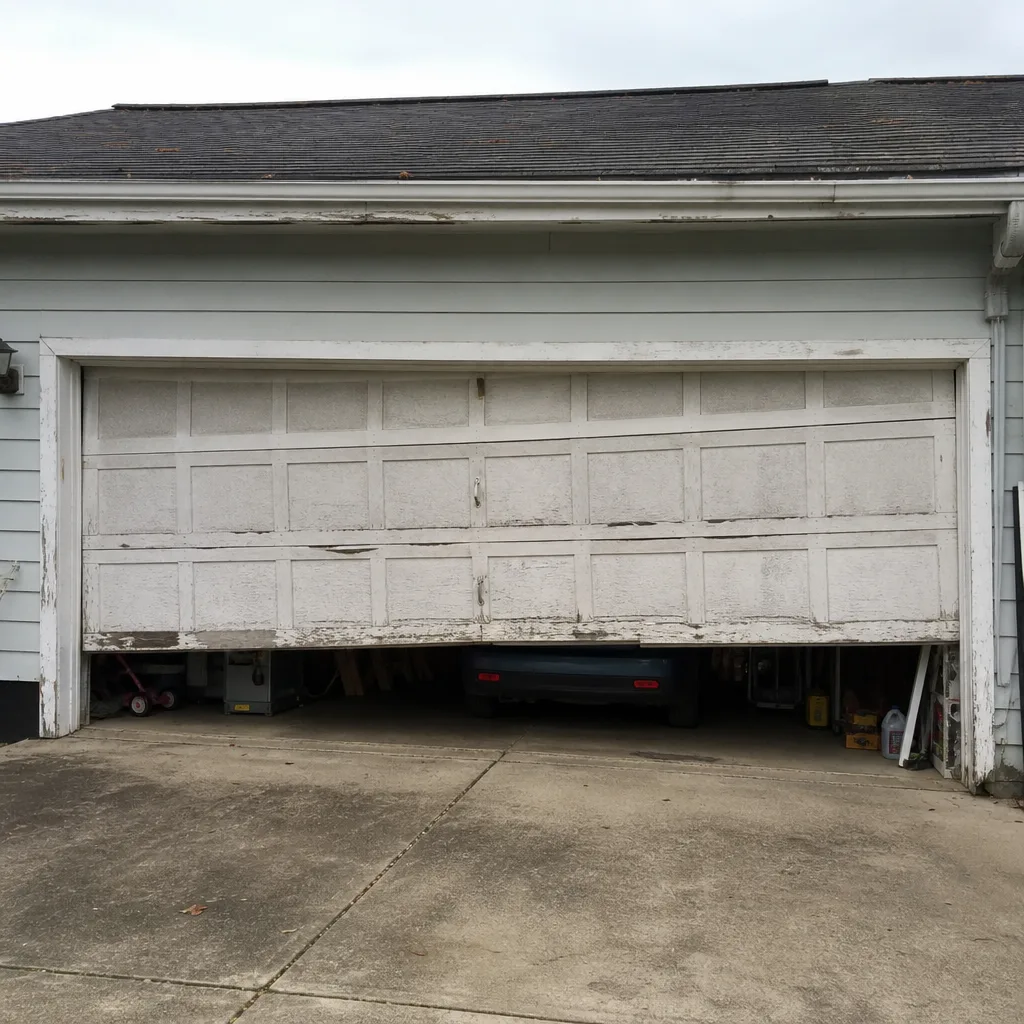 Before
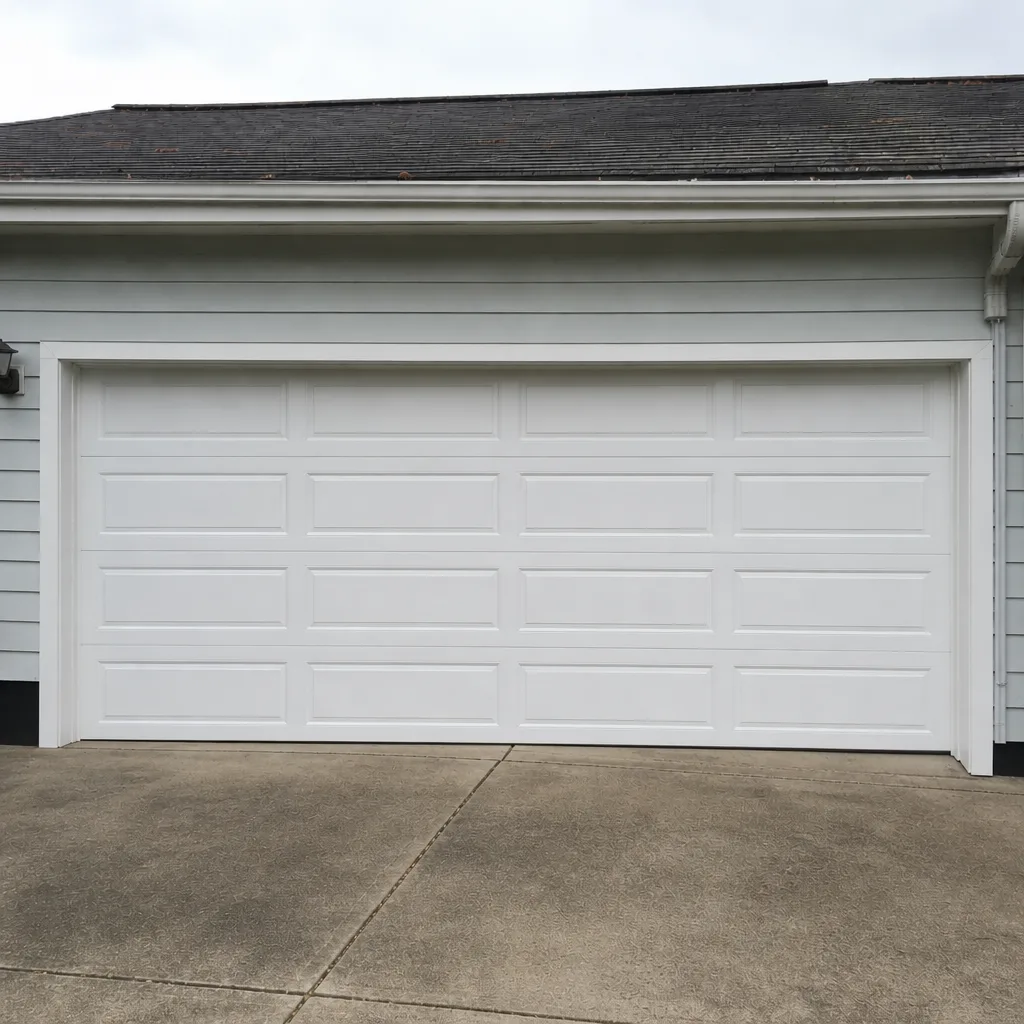 After
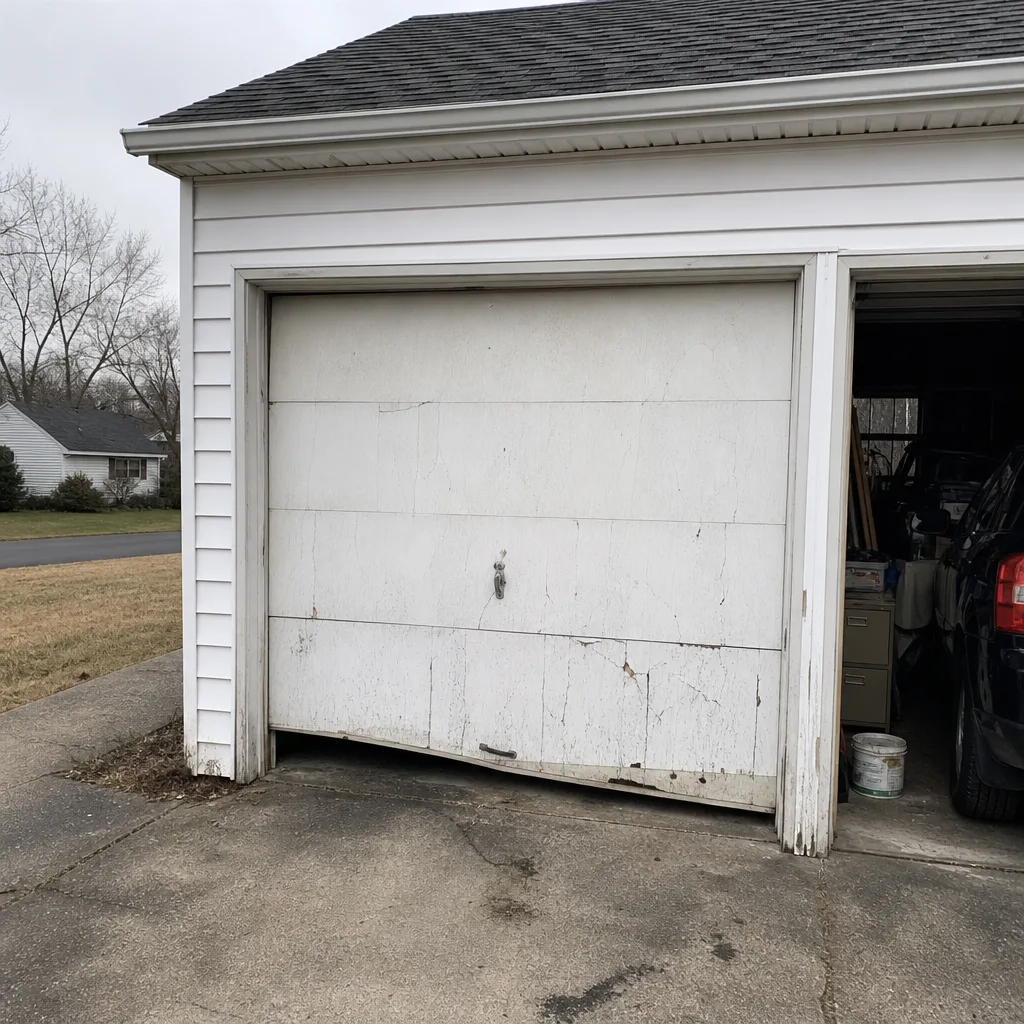 Before
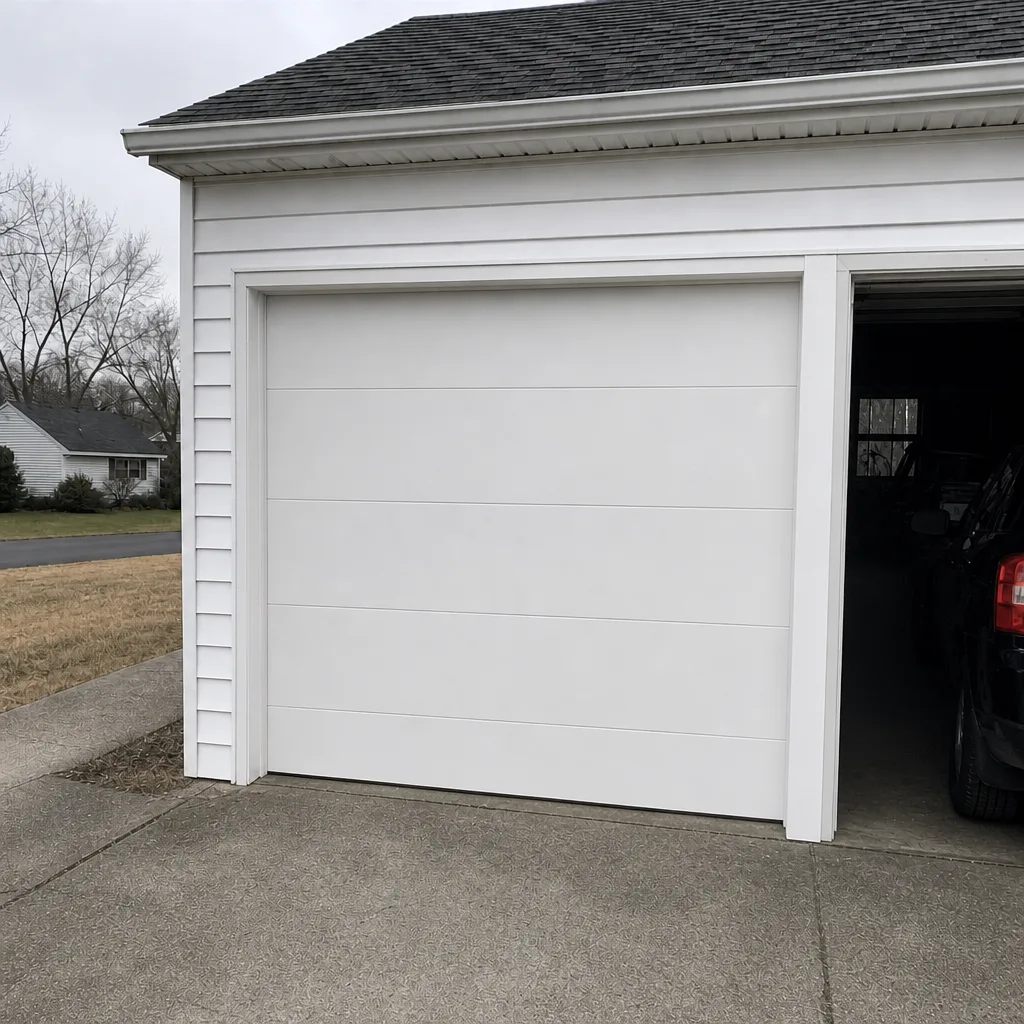 After
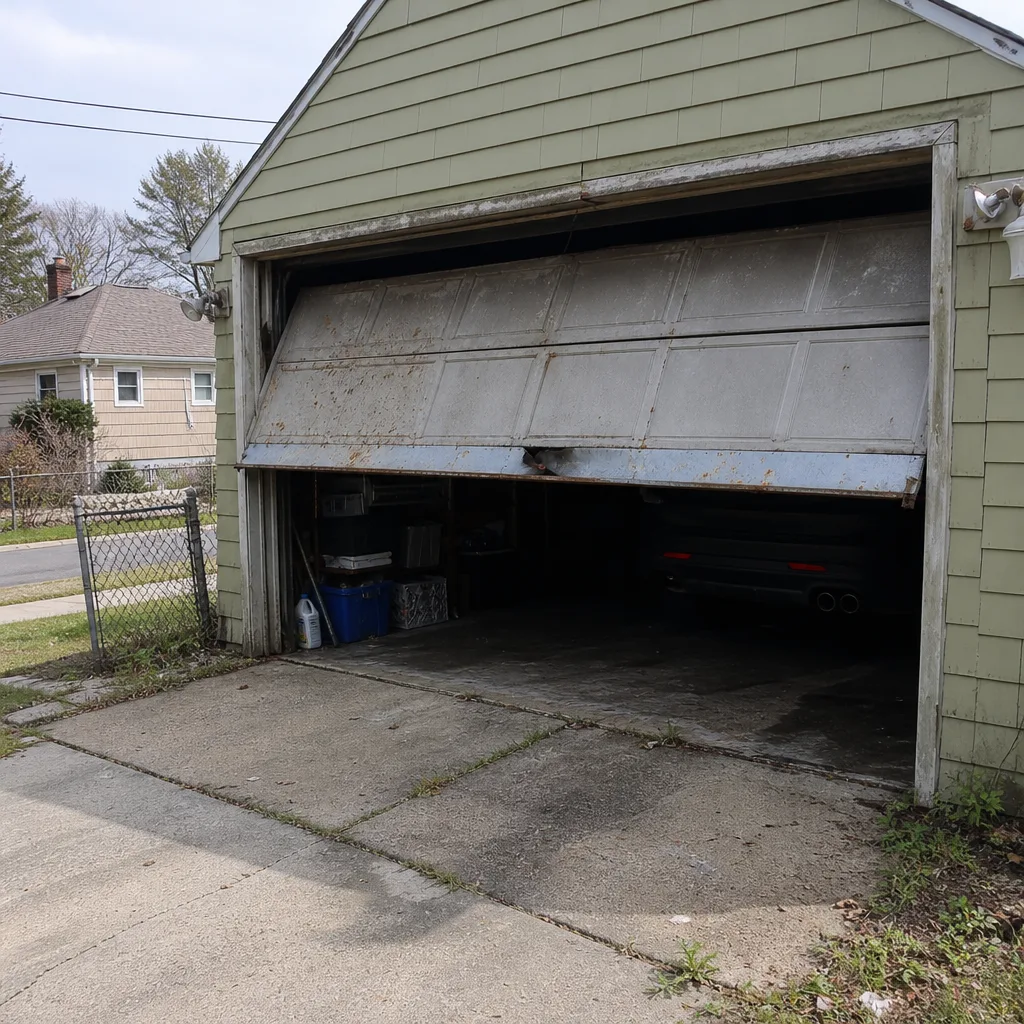 Before
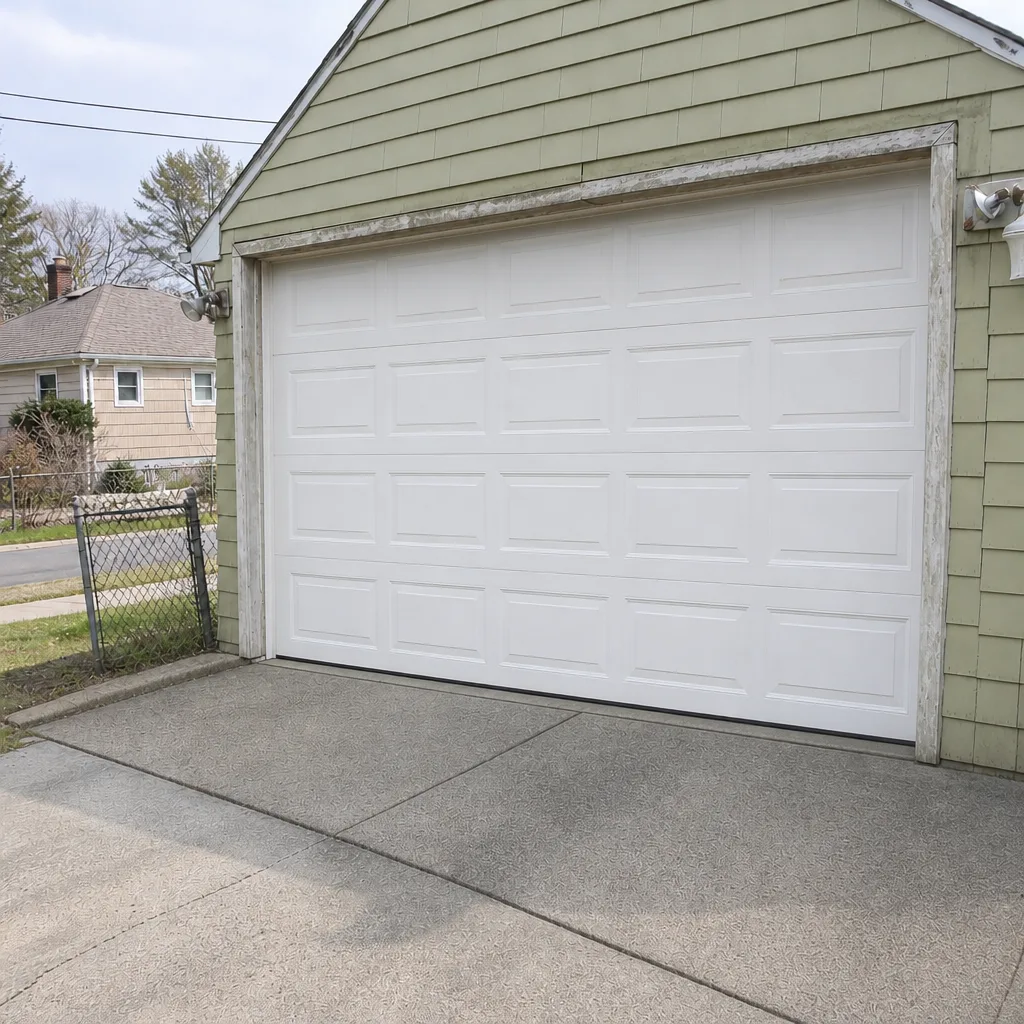 After
When to Call a Professional
Call a professional the moment the problem crosses into Tier 3. That means any broken or stretched spring, any noise that sounds like a snap from above the door, any door with a cable visibly off its drum, and any door that has become crooked. Also call when your safety reverse test fails twice in a row – the safety system is set by the opener’s force settings and limit switches, and getting those correct is a technician task. If the door won’t raise at all, that’s the case for garage door repair, not a weekend DIY project. Brick Garage Door Repair offers free estimates in Brick Township. Call (877) 792-6059.
Frequently Asked Questions
No. Torsion springs store enough energy to cause serious injury through an uncontrolled release, and the winding procedure requires specific tools and an understanding of where the stored force is going. This is a professional-only task, and it’s the single most important line in this entire guide. Call (877) 792-6059 for a free estimate.
Five common repairs are safe DIY: lubricating the moving parts, testing the safety reverse and photo eye, replacing the bottom weatherstrip, cleaning the tracks, and replacing rollers on a fully de-tensioned door. These tasks don’t touch the counterbalance system, and they’re the maintenance that most extends the door’s life. Call (877) 792-6059 if a DIY task turns out to be more than expected.
It can, if the manufacturer’s warranty contains a “service by unauthorized persons” or “improper adjustment” clause. Openers from LiftMaster, Chamberlain, and Genie commonly use this language for force and limit settings. Read the manual that came with your equipment to know exactly what’s covered. Call (877) 792-6059 if you want help understanding your warranty before a repair.
Yes. A loud pop from the ceiling area of the garage usually means a torsion spring has snapped, and the door is now without counterbalance. Don’t operate the door. Call (877) 792-6059 and we’ll walk through the situation on the phone. We answer 24/7. A call outside dispatch hours is booked into the next opening, Sunday through Friday, 7am to 7pm.
If the motor runs and the trolley moves but the door doesn’t lift, the problem is in the connection between the opener and the door. If the motor hums without moving the trolley, the opener is the problem. If the door binds and grinds while moving, the door mechanism (rollers, tracks, hinges) is the problem, not the opener. Call (877) 792-6059 if the diagnosis is unclear – our technicians have up to 8 years of experience.
Pricing is set per job by a written estimate after we see the door, so it depends on what’s actually wrong. Our estimates are free and there’s no service-call fee. The written quote you agree to before any work starts is the price you pay. Call (877) 792-6059 for an exact figure.
The Bottom Line
The DIY-versus-professional question isn’t about skill. It’s about physics. Any task that touches the counterbalance system – springs, cables, drums – belongs to a trained technician, full stop. Any task that keeps the door clean, lubricated, and correctly adjusted is yours to own and worth doing often. Everything in the middle is a judgment call a careful homeowner can make. In Brick Township, where the seasonal swings and older housing stock push the door harder than average, that maintenance you do yourself is what makes the difference between a door that lasts and one that fails on the first cold morning. When the repair crosses into the spring zone, call us and we’ll bring the door back to solid.
One call covers it all – from a broken spring to a brand-new door. Call Brick Garage Door Repair at (877) 792-6059 for a free estimate. We answer 24/7. Fast dispatch from 7am to 7pm, Sunday through Friday.
Written by the team at Brick Garage Door Repair.