
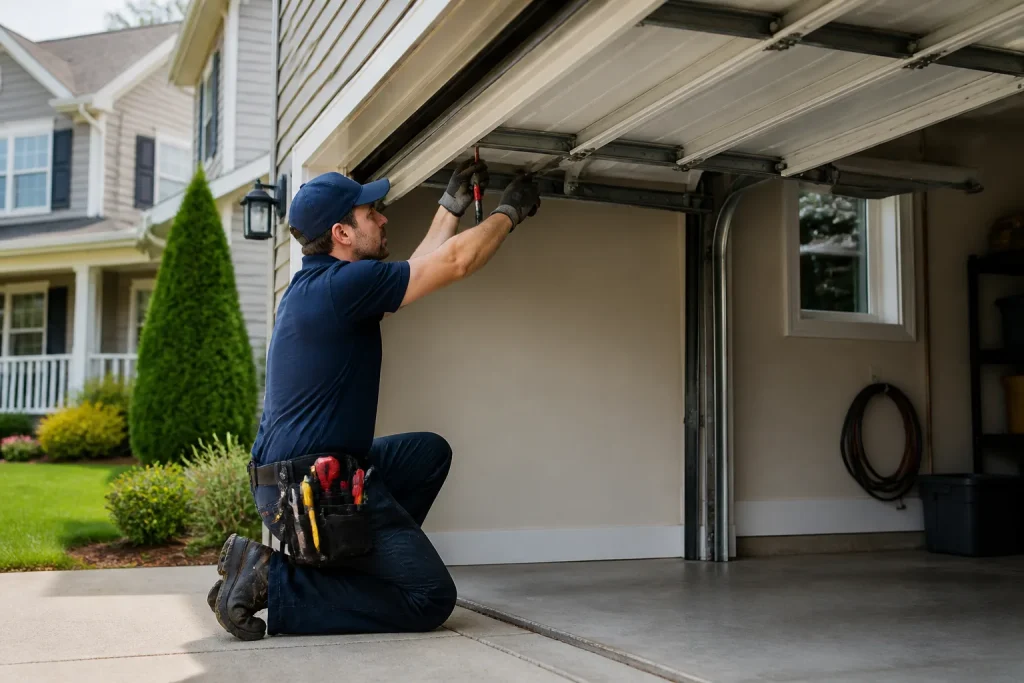
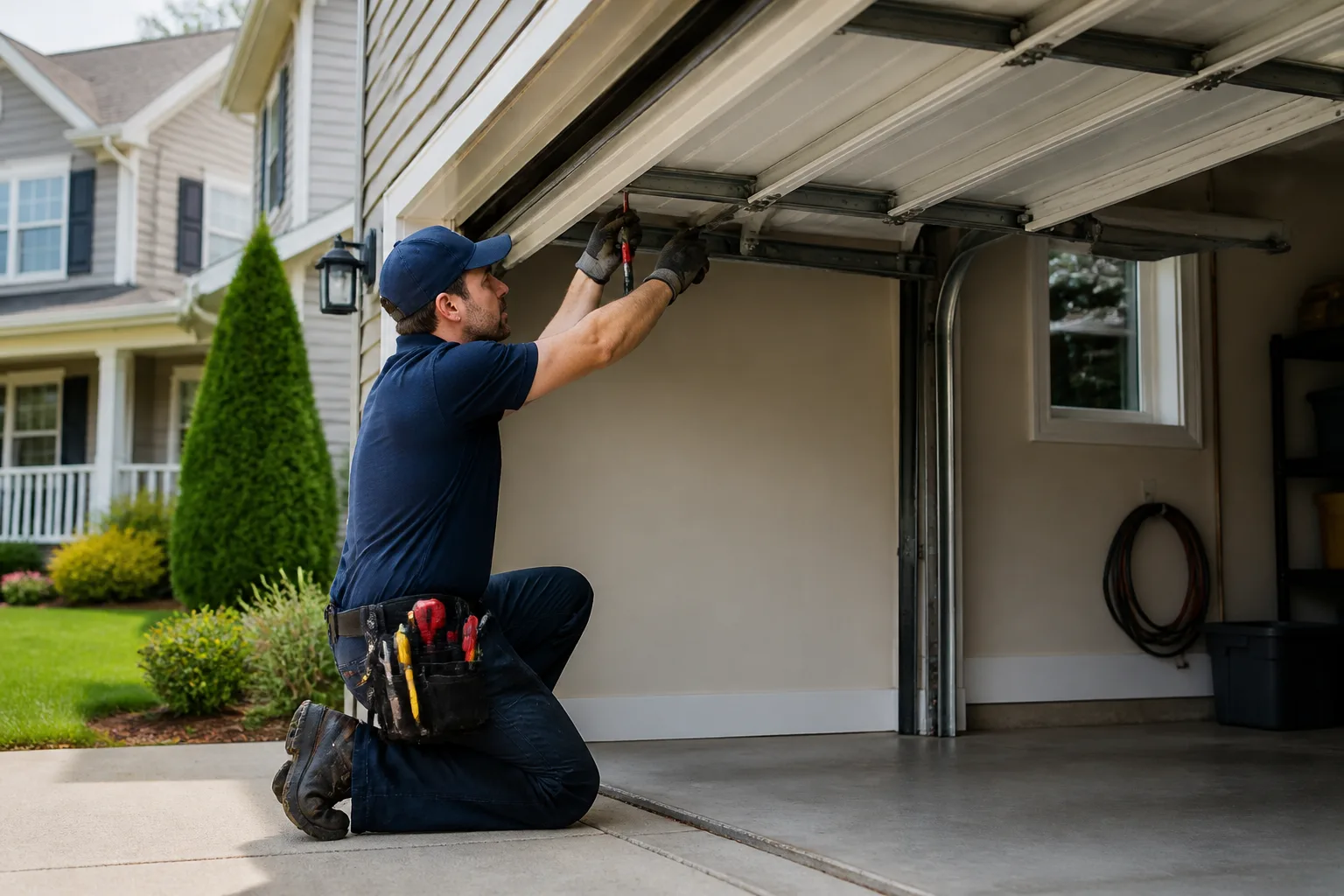
LiftMaster Garage Door Repair in Brick Township: A Homeowner’s Guide
LiftMaster openers run longer than most, which is exactly why their failures take homeowners by surprise. We hear the same line in Brick Township: “It worked fine for years, then a blinking light and nothing.” In our experience, the two parts that quit first are the logic board and the wall console wiring, and most of those failures trace back to something preventable. If you’d rather not chase a blink code yourself, call (877) 792-6059. We answer 24/7.
Why Do LiftMaster Openers Fail in Brick Township Homes?
The short answer: LiftMaster builds to last, and durability masks wear until a component gives out without warning. The brand’s reliability creates a false sense of permanence, so nobody thinks to look inside the motor housing or behind the wall button until the door stops. When it does, the trouble usually sits in two places.
The logic board runs the whole show: the remote signal, the safety reversal, the travel limits. Sitting in a garage that swings between humid summer air and cold winter nights, the board’s solder points and connections slowly degrade. The wall console takes a beating too. The thin low-voltage wire behind it runs through studs and gets pushed, stapled, or nicked during a remodel, and a single worn conductor can make the opener act dead when it’s perfectly healthy.
Then there’s MyQ. The app says “offline,” and the homeowner assumes the opener is shot. In our experience, a big share of MyQ complaints end with the mechanics working fine and only the Wi-Fi bridge or router handshake failing. The door is fine; the network isn’t.
What Do the LED Blink Codes on a LiftMaster Mean?
Blink codes are LiftMaster’s own diagnostic language, and they tell you more in a few flashes than a dozen guesses. The exact count depends on the model, so check the chart on the motor head, but here’s how we read the common patterns on the 8355, 8500, and 84501 units we service across Brick Township.
- 1 flash, then a pause: the safety sensors can’t see each other. Usually a misaligned sensor, a spiderweb in the lens, or sun glare hitting the receiving eye.
- 2 flashes: a wiring problem, often the safety sensor wire itself.
- 3 flashes: the safety reversal system is failing its test. The door needs to reverse on contact, and the logic is holding it back.
- 4 flashes: a door control or wall console fault.
- 5 flashes: a problem inside the motor itself or its travel limits.
- 6 flashes: the motor’s internal circuit issue, usually the logic board.
A steady green light on the sensor is good. An amber one means it’s sending fine but not receiving. Those codes are the first thing any competent technician reads, and they cut diagnostic time sharply. If the chart and the fixed light don’t add up, that’s your cue to stop guessing.
Which LiftMaster Repairs Can You Handle Safely Yourself?
Some fixes belong in a homeowner’s hands, and some don’t. Knowing the line keeps you safe and protects the warranty.
Fair game for most people: reprogramming a remote or keypad, re-pairing MyQ, and adjusting the travel limits if the door closes too far or stops short. Those are control settings, and LiftMaster documents them plainly in the manual.
Leave these to a technician: anything touching the logic board, the safety sensor wiring, or the high-tension springs and cables. A garage door spring carries serious stored force, and a spring or cable that lets go can cause real injury. We treat that as the most dangerous part of the system for good reason. Working on it without the right tools is where people get hurt. A trained pro is the right call, and it’s also a job your warranty expects to be handled correctly.
Dealer Repair vs. Brand-Agnostic Specialist: Which Diagnoses Faster?
Here’s the part most guides skip. A LiftMaster-authorized dealer and a brand-agnostic specialist approach the same broken door very differently, and it comes down to what they’re looking for.
A dealer knows their product cold, but they’re trained to get you into a LiftMaster replacement. A specialist who works across brands, including Raynor and Chamberlain, has no reason to steer you toward a new opener. We fix the brand you already own. That matters on a comparison like this one.
The bigger difference is the diagnostic step single-brand techs often skip: checking whether the opener is the problem at all. Plenty of “LiftMaster failures” in Brick Township turn out to be door hardware. A binding track, a worn roller, or a door that’s gone out of balance puts strain on the opener and trips its safety logic. Replace the opener and the door still drags. The sharpest fix starts at the door, then works back to the motor. In our experience that ordering saves both money and return visits.
When a LiftMaster Repair Is Really a Door Problem
Before anyone blames the opener, we look at the door. If it binds in one spot, drops faster on one side, or the opener strains and reverses, the motor may be doing its job and correctly refusing to force a jammed door. Springs lose tension, rollers flatten, and tracks bend out of alignment over a season of use. Each one adds resistance the opener reads as a fault.
The test is simple to describe and hard to fake: disconnect the door from the opener and move it by hand. A balanced door should glide and stay put halfway up. If it won’t, the trouble is in the door, not the motor. That’s often where garage door spring repair comes in, and it’s exactly the check a single-brand tech may rush past on the way to selling a new unit.
When to Call a Pro
Call a professional when you see blink codes you can’t clear, a door that reverses on its own, grinding or straining from the motor head, or any sign of trouble with the springs and cables. Those point to hazards or parts that need proper tools. Our technicians have up to 8 years of experience across LiftMaster and the other major brands, so the diagnosis starts with your system, not a sales pitch. Fast dispatch from 7am to 7pm, Sunday through Friday.
Related services in Brick Township: for door problems beyond the opener, see garage door repair; for motor, remote, and MyQ issues, see garage door opener repair.
The Bottom Line
LiftMaster makes a tough opener, but tough isn’t immortal. A little attention to the logic board’s environment, the wall console wiring, and the door’s own balance heads off most failures before they strand a car. Match the blink code to the fault, know which repairs are yours and which aren’t, and check the door before you blame the motor. For a brand-agnostic specialist who fixes what you already own, that’s where Brick Garage Door Repair comes in. If you’re in Brick Township and need help, Brick Garage Door Repair offers free estimates. Call (877) 792-6059. We answer 24/7. Fast dispatch from 7am to 7pm, Sunday through Friday. The price is quoted and agreed before any work starts, and the written estimate sets the final number.
Frequently Asked Questions
Usually a dead remote battery, a lost pairing, or a wall console fault rather than a failed opener. Reprogram the remote first, then check the console. If it still won’t respond, the logic board’s receiver may be the culprit. Call (877) 792-6059 for an exact quote; estimates are free.
No. Board replacement involves the motor’s control wiring and is best handled by a trained technician to protect the warranty and your safety. We work on the brand you already own and can diagnose it quickly. Call (877) 792-6059.
It depends on the part and the fault, so we set the price per job by a free written estimate after we look at it. You’ll see the number and agree to it before any work starts. Call (877) 792-6059 for an exact quote; estimates are free.
No. The written estimate you approve is the price. If we find something else while working, we explain it and get your okay before anything changes. Call (877) 792-6059 to book a free estimate.
Written by the team at Brick Garage Door Repair.
Need Garage Door Help?
Call Brick Garage Door Repair - the local pro we connect you with is licensed and insured, here with fast help in Brick Township.
(877) 792-6059